Old Believers

Old Believers

In 1652, the Russian Orthodox Church changed its rituals. For a group of believers, this was not a small adjustment. It was heresy. They refused and left. Some of them found their way to the western shore of Lake Peipsi, as far from the Tsar’s reach as they could get. Three and a half centuries later, their descendants are still here, fishing the same lake, growing the same onions, keeping the same faith.

Who are Old Believers

The Old Believers did not recognise the liturgical reform of Patriarch Nikon of 1652, making the rituals of the Russian Orthodox Church similar to the Greek ones. In their opinion, any changes to typically Ruthenian liturgical traditions were heresy and a renunciation of the only true faith. They refused. They were persecuted. They fled.

Many fled west to Estonia, which at that time was under the rule of the Kingdom of Sweden and so beyond the Tsar’s control. Lake Peipsi, large and remote, was the edge of the known world. They built villages along its shore and stayed.

Today there are about 15,000 Old Believers and 11 registered parishes in Estonia. Most still live along the same stretch of shoreline their ancestors chose three centuries ago. The community is shrinking and aging as young people leave for the cities, but the traditions remain.

The prayer houses

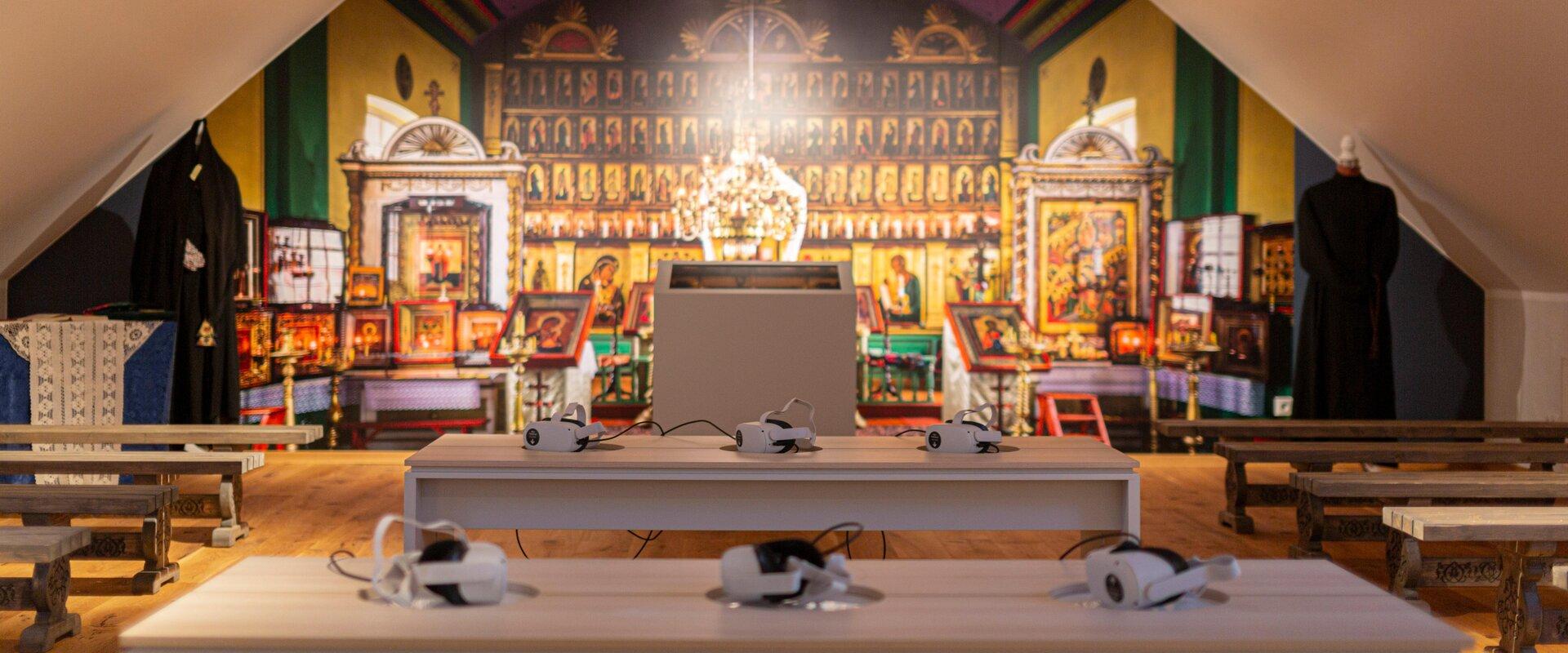
Worship houses are the centre of Old Believer religious life. Services are led by a church elder, who may be male or female, though only male elders may perform certain ceremonies such as baptism or confession. Worship houses are decorated with ornate icons. Services are long and serious, featuring unanimous choir singing from ancient Slavonic sheet music.

The prayer houses along the Onion Road are colourful, modest buildings with bright wooden facades. They are still in active use. Services are closed to outsiders, but the Old Believers Museum in Kolkja offers a virtual reality experience of a prayer service at the Great Kolkja Prayer House.

There is one rule worth knowing before visiting an Old Believer home. When visiting the house of an Old Believer, you must bring your own dishes and utensils. This is not inhospitality. It is one of the oldest purity rules in their tradition, applied even to guests.

The Onion Road

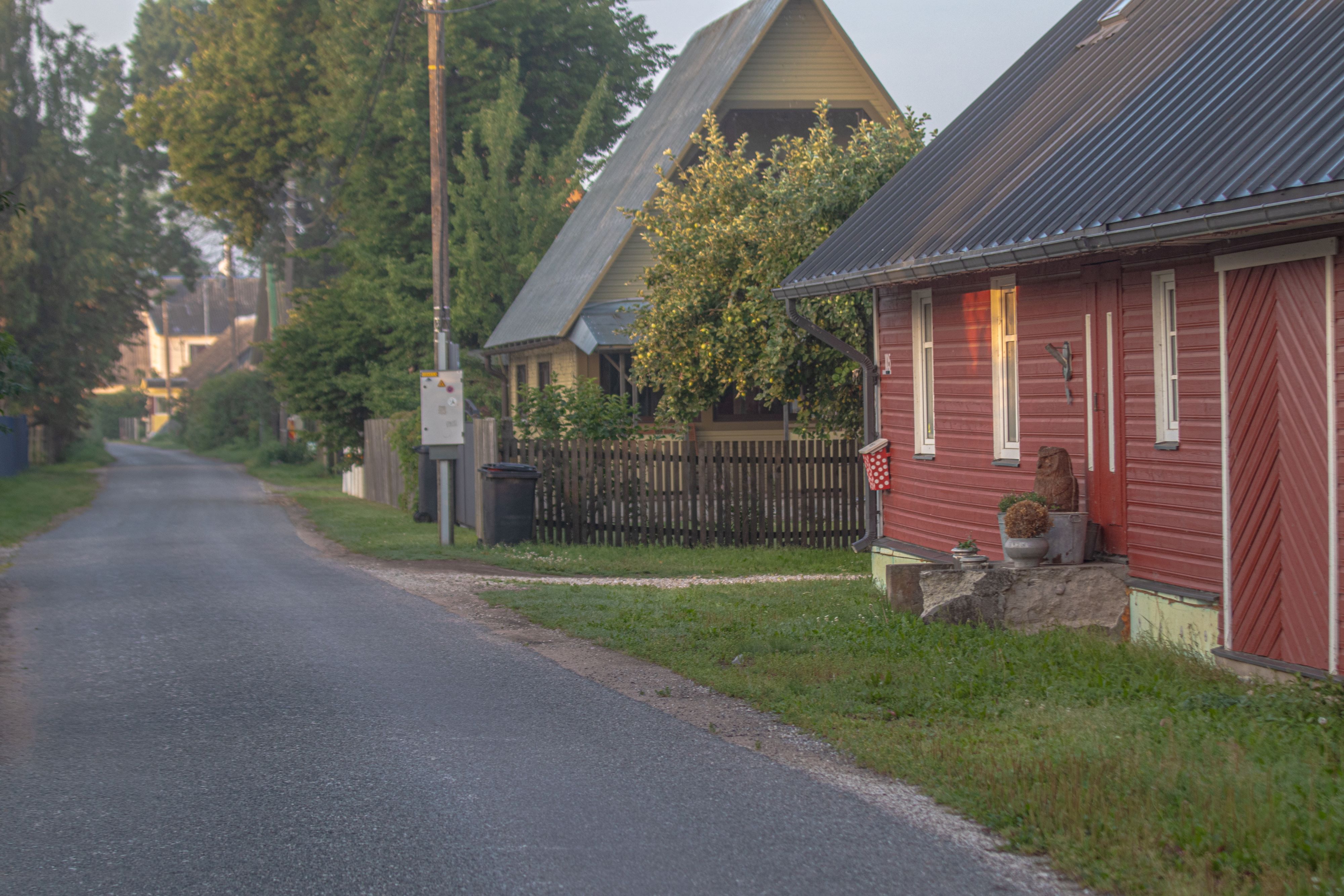
The villages along the western shore of Lake Peipsi are built in a long ribbon, houses running parallel to the water with gardens reaching down to the road. In summer, stalls appear outside almost every gate selling braided onion chains, smoked fish and pickled cucumbers. The sandy lakeshore soil is not good for much, but it is ideal for onions. The ones grown here are considered the best in Estonia. Everyone who has tried them agrees.

Driving the Onion Road in summer doesn’t feel like tourism. It just feels like a road where people happen to live and sell what they grow.

Food and the samovar

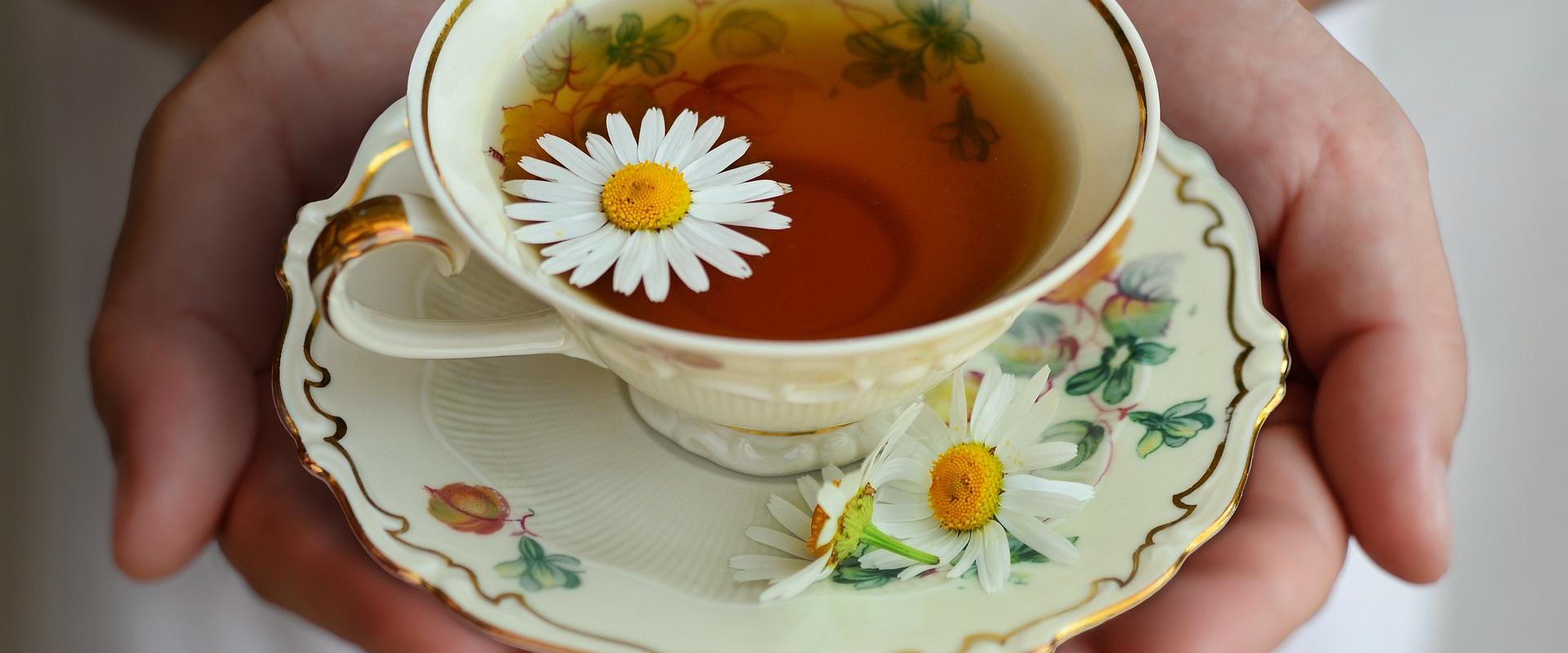
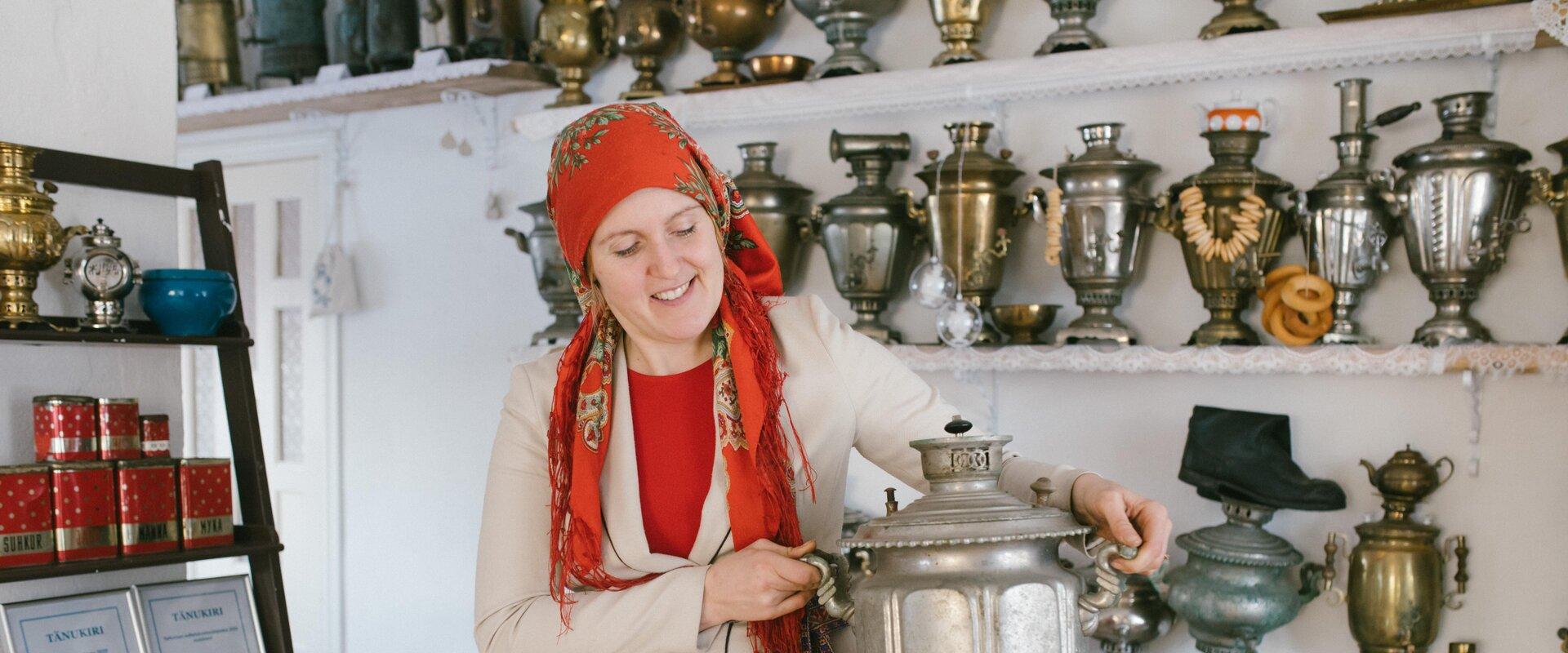
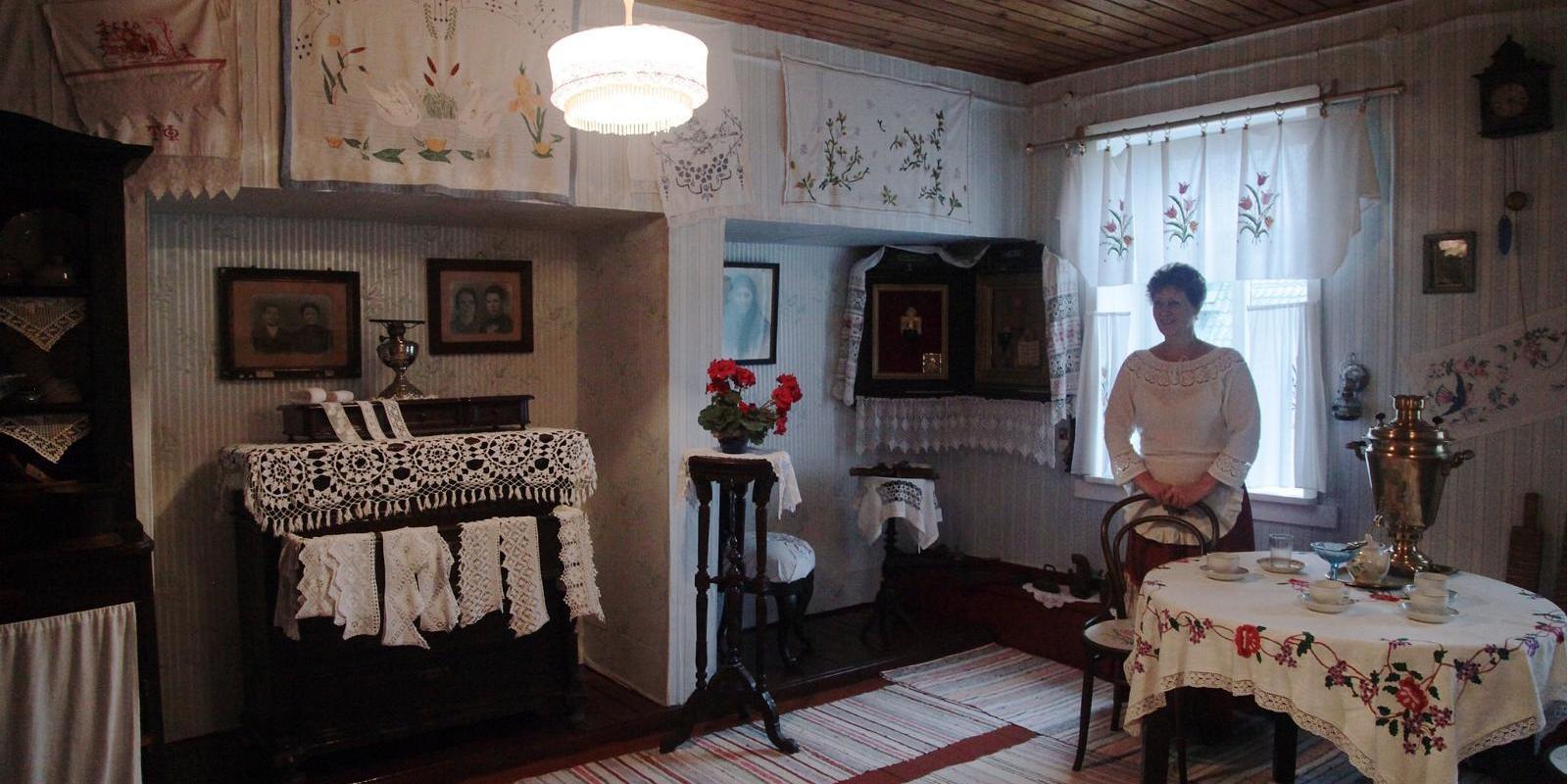
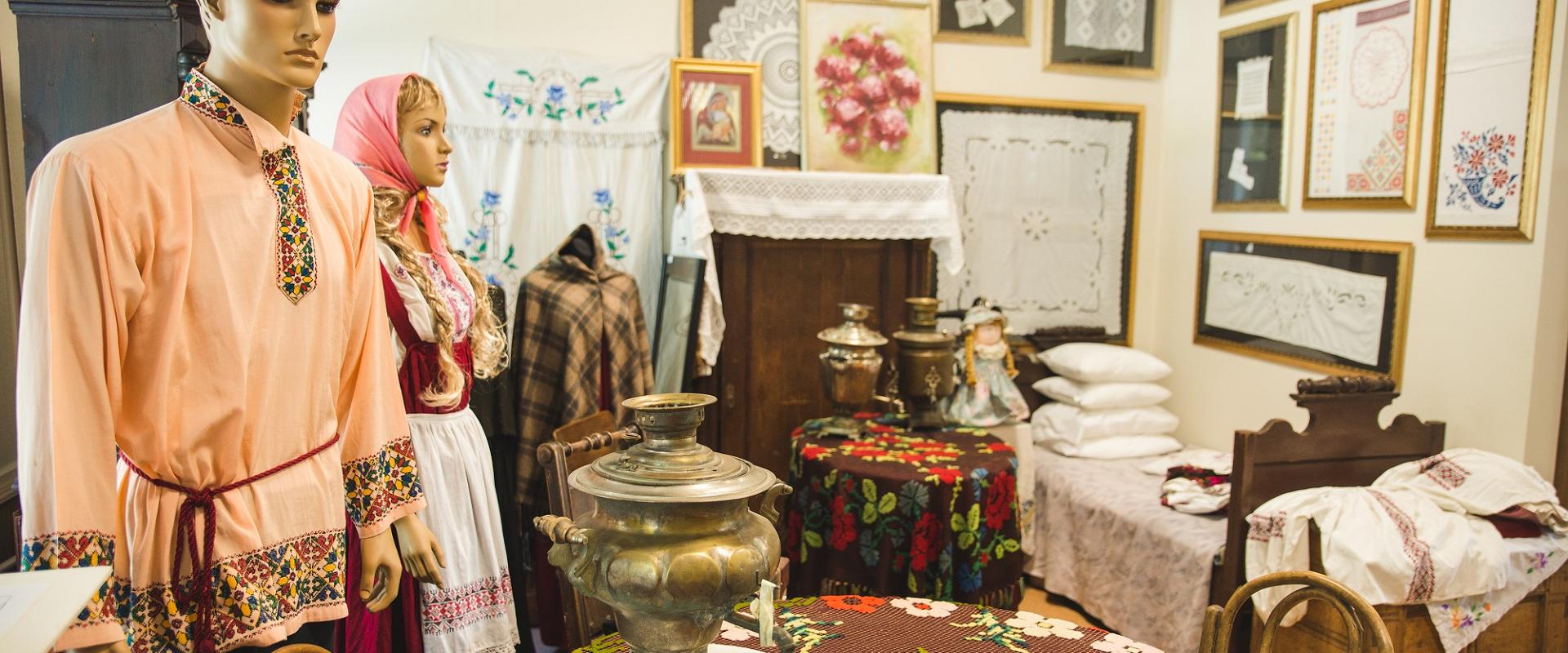
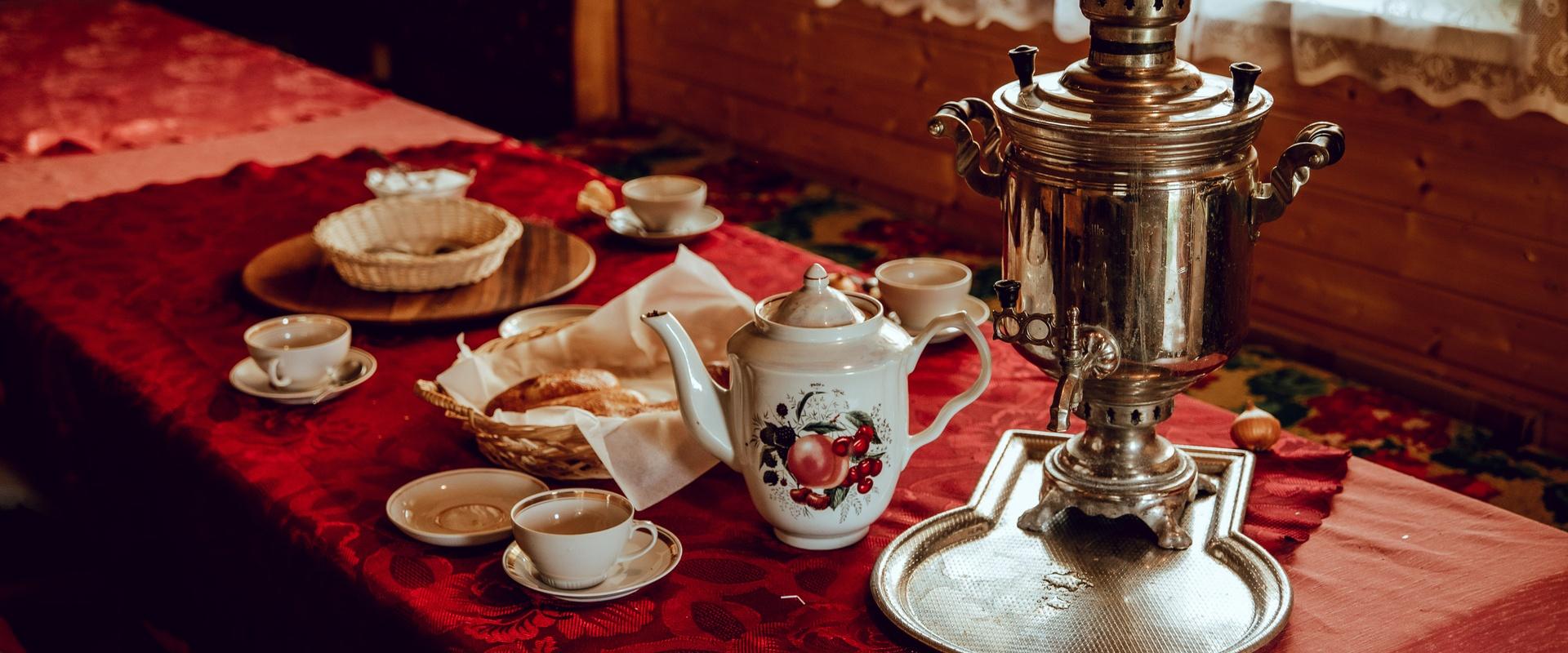
The samovar is the centrepiece of Old Believer hospitality. Tea is brewed slowly, poured strong into a cup and topped up with boiling water from the samovar at the table. The traditional drink is Ivan Chai, made from fermented willowherb leaves, served with barankas, cookies and boiled sugar. It is sweet, unhurried and nothing like the coffee culture you find elsewhere.

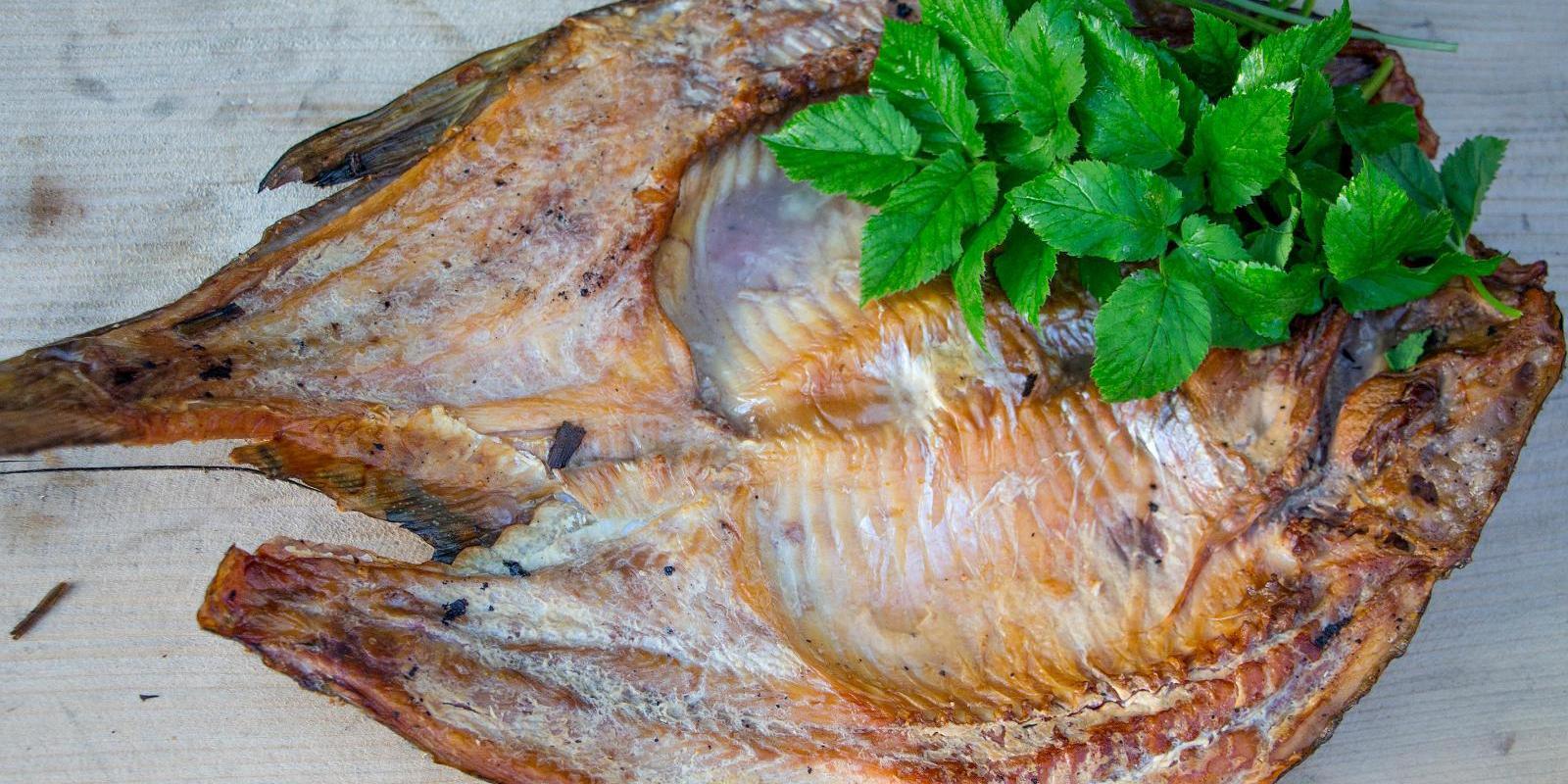
The food is built around what the lake and the garden provide. Smoked bream, dried roach, marinated perch, fish soup, onion pie. Pickled cucumbers in quantities that suggest the whole village is preparing for winter simultaneously.

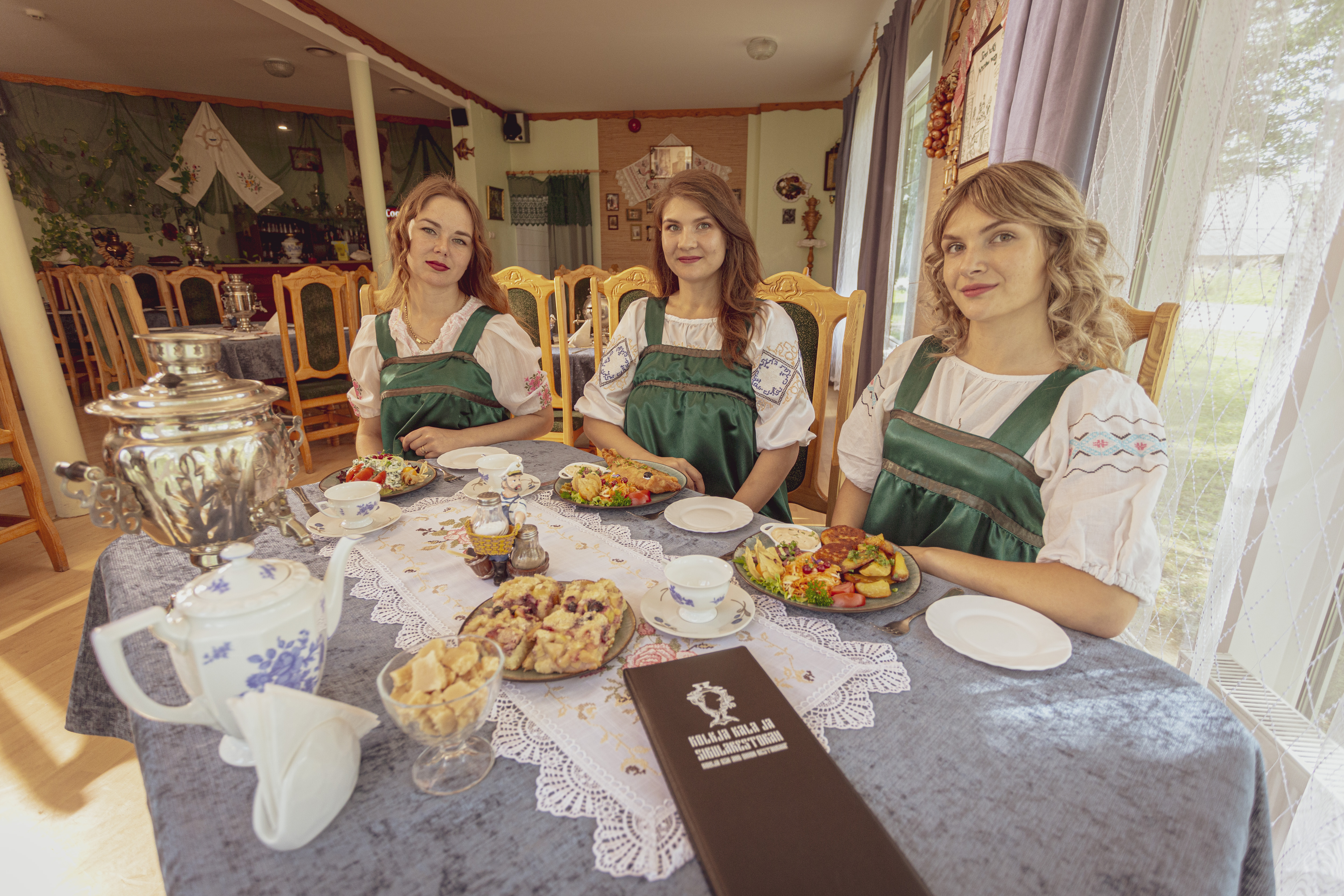
The only Old Believer restaurant in the region is in Kolkja, said to be the only one of its kind in the world. Fish and onions, served in hearty portions, in a room decorated with traditional Russian folk patterns and paintings of Lake Peipsi.

See it for yourself

  • Guided tours
  • Virtual reality (VR)

Old Believers Museum in Kolkja

Who are the Russian Old Believers? How and when did they arrive in Estonia? Why did they settle in the Peipsi region, and what are their customs? Why have they grown onions this way for centuries? The Old Believers Museum in Kolkja is located on the Onion Route and tells visitors the story of the Peipsi Region's Russian Old Believers. The exhibition is in Estonian, English, and Russian and includes virtual reality, where you can experience the Old Believer prayer. We also offer hour-long guided tours in Estonian and Russian. There is an observation tower overlooking Lake Peipsi at the museum! Come and discover the world of the Old Believers in Kolkja!

  • Vegetarian food

Kolkja Fish and Onion Restaurant

At our small but authentic Kolkja Fish and Onion Restaurant, we offer genuine Old Believer dishes from the Peipsi region, prepared with freshly caught lake fish and locally grown, world-famous Peipsi onions. The dishes are based on traditional recipes passed down through generations, reflecting the unique culinary culture of the Peipsi lakeshore area. The menu features smoked fish, richly flavored fish soup, hearty onion soup, juicy fish patties, and a variety of desserts, including traditional Old Believer pies. The culinary experience is crowned with a traditional samovar tea, which is best enjoyed slowly in good company. The restaurant is located on the Onion Route (Sibulatee), and our cozy setting is perfect for families, friends, and travel groups alike. For groups, we offer the opportunity to arrange storytelling by the restaurant’s hostess about local life and Old Believer customs, as well as readings from old books, making the visit unique and memorable.

Peipsi Teemaja (Teahouse)

The teemaja (teahouse) in Mustvee is a cosy place in the capital of the Peipus region, where good tea and local food and drinks are offered. The menu includes fish from Lake Peipus and local garden and forest products.On the first floor, we can host family events and other anniversaries.We also offer accommodation on the second floor.Peipsi Teemaja is the well-known red house in the centre of Mustvee.In addition to meals, we have an exciting selection of handicrafts and souvenirs.

  • Guided tours
  • Workshops

Mesi Tare Lake Peipsi fish cooking workshop

In the Mesi Tare fish cooking workshop, we prepare local dishes from seasonal Peipsi fish! The fish cooking workshop, held in the courtyard of the Mesi Tare Holiday Home, covers the entire process from start to finish, including cleaning, filleting, preparation, and cooking the fish. Depending on the season and the fish we have, we cook uhhaa, a traditional fish soup, smoke the fish, pan fry fish, etc. And finally, the moment that everyone is especially looking forward to — we serve the food and enjoy an authentic meal in an Old Believers' village on the Onion Route. The winter fish cooking workshop includes an experience on the ice with a karakat ride on frozen Lake Peipsi, ice fishing, and preparing uhhaa. See you at the workshop!

  • Guided tours
  • Workshops

Varnja Samovar House

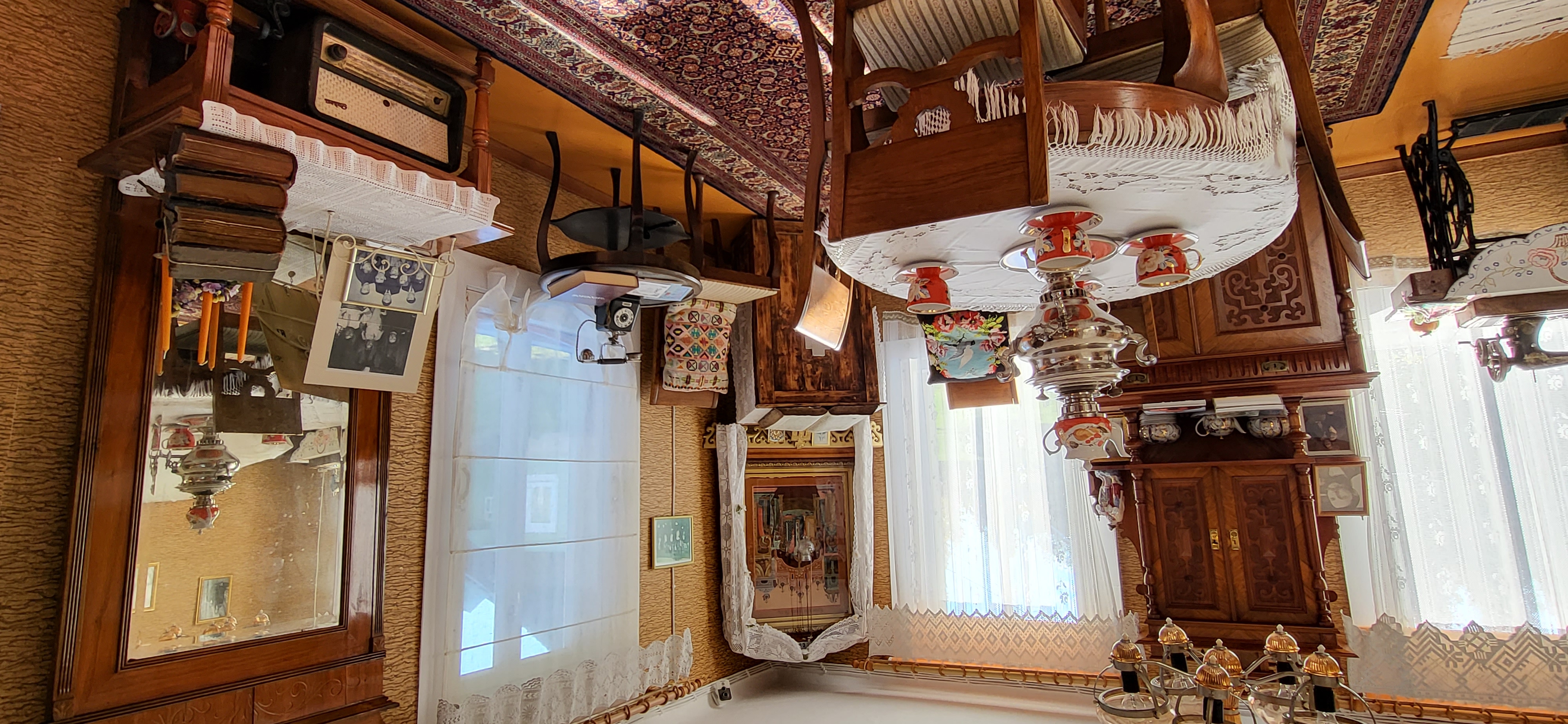
Peipsiveere Samovar House is a small museum in the Old Believers' village of Varnja that introduces visitors to the world of samovars and tea culture along Lake Peipsi. The private collection, accumulated over decades, contains more than 200 diverse samovars. From simple tin samovars to rare ones with elaborate engravings, reflecting the skills and traditions of masters from different eras. The exhibition, located in an authentic Old Believers' house, offers visitors insight into why the samovar was more than just a kettle for centuries. Stories reveal the origins of samovars, manufacturing techniques, usage methods, different design types, and tea-drinking traditions in the communities along the lake. Every guest can taste genuine samovar tea and the famous Ivan chai, and try traditional boiled sugar with the tea, an integral part of Old Believers' tea culture. If desired, one can also explore handmade samovar accessories and hear stories from the hostess of Mesi Tare about preparing, serving, and respectfully preserving tea.

  • Guided tours

Peipsimaa museum

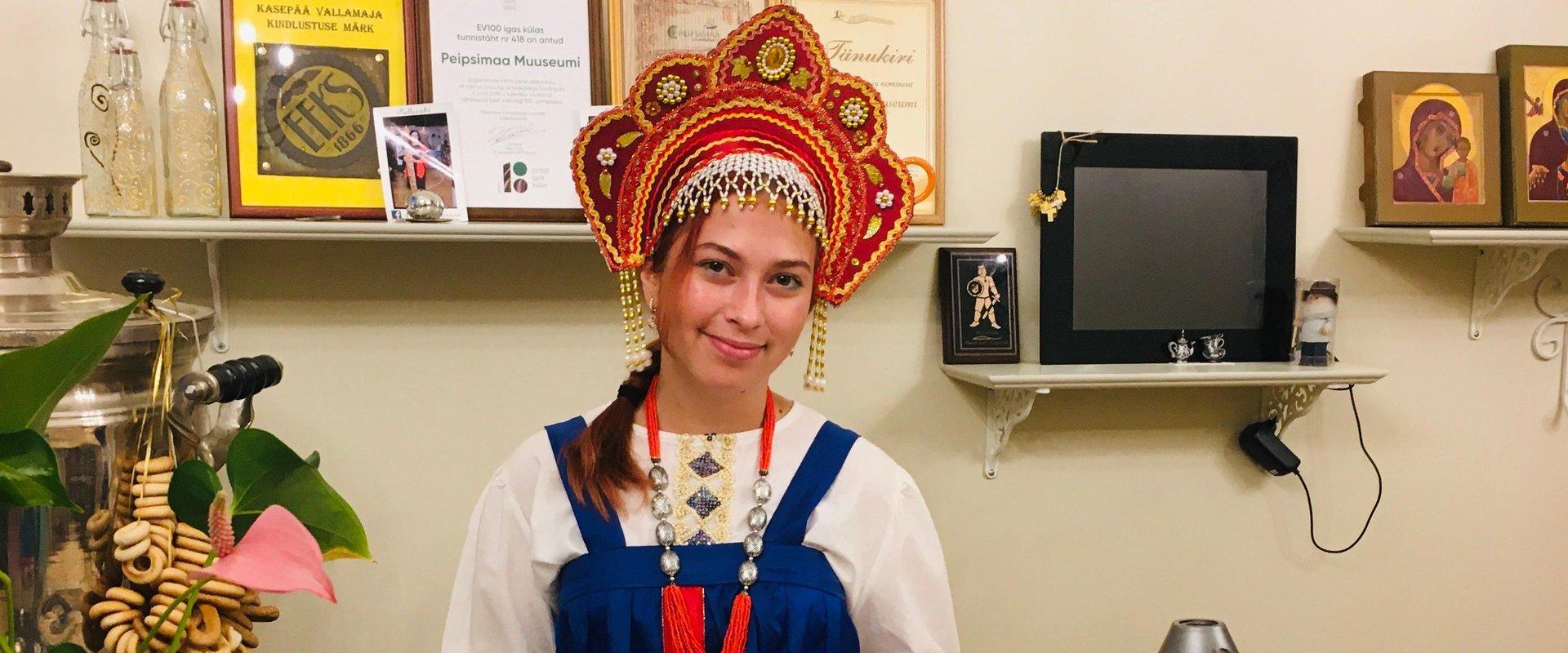
The Peipsi County Museum introduces the life of the Old Believers, the kitchen and church culture, and the life and work of the world-famous icon painter Pimen Sofronov from the local village of Tiheda. Samovars, "podrushniks", icons, "lestovkas" are worth seeing. You can buy souvenirs and handicrafts related to the culture and nature of Peipsi, as well as sweets, tea mixtures and other local products. A guided tour introducing the Old Believers and the Ivan Chai tea ceremony can be booked in advance. With a museum ticket, you can also visit the Peipsi Järve Elu room with a permanent exhibition located next door.

  • Guided tours
  • Boat trips
  • Walking tours

Mesi Tare day trip: Boat trip to Piirissaar in Lake Peipsi

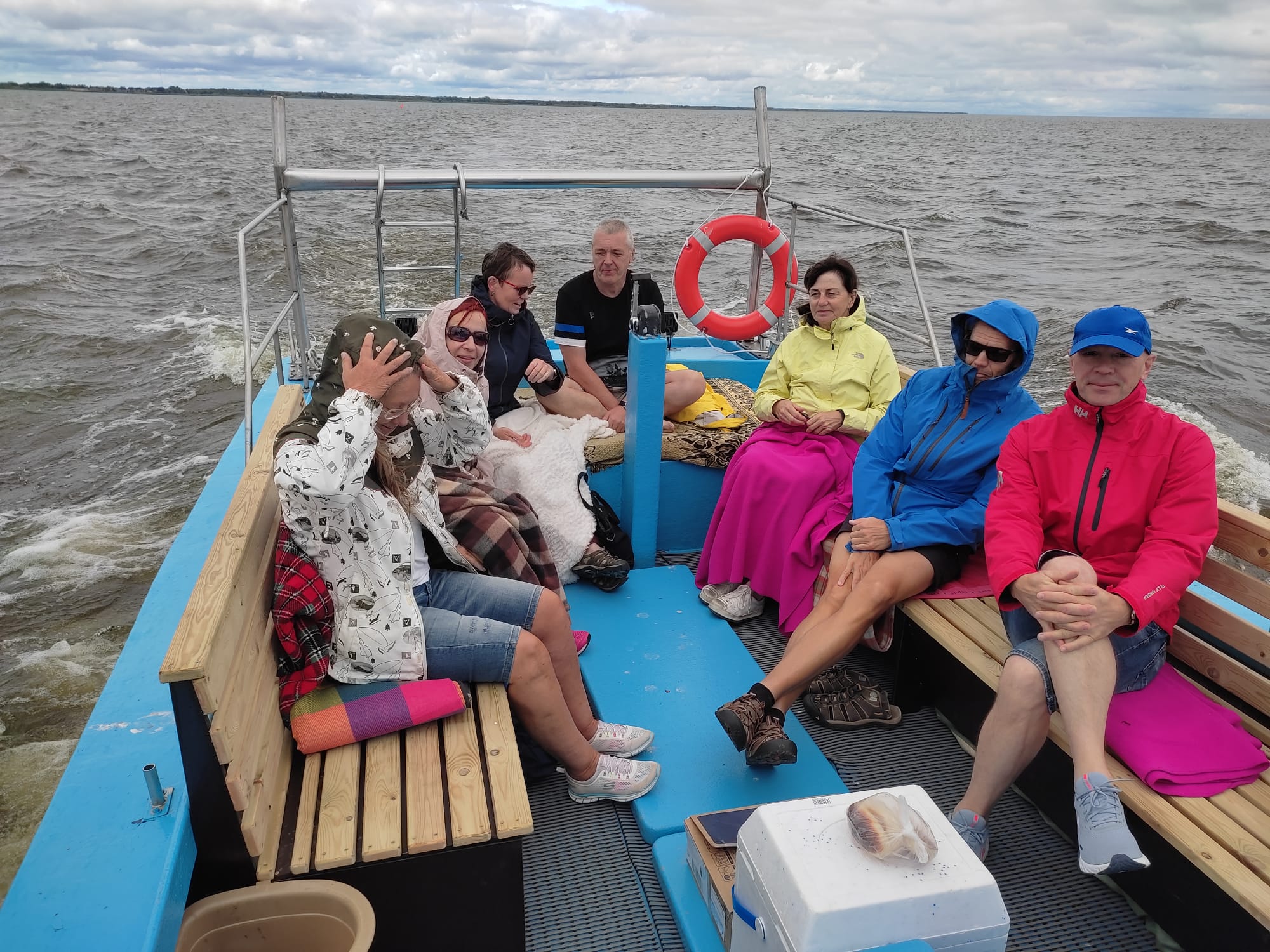
The host of Mesi Tare will take your group on an adventure to Piirissaar, a small island in Lake Peipsi! We start from the Varnja Harbor, where the host will be waiting with a fishing boat. The boat trip lasts two hours, depending on the weather and water level. We will walk with a guide through Piirissaar's three villages and see all the important places on the island, including the Piirissaare Old Believers Museum, the location of the Old Believers' prayer house, the Orthodox church and the Piirissaare Titanic. For lunch, the guide will take you to Zinaida's home, where she will lay out a magnificent table for her guests. (Note: The food must be paid for on the spot.) The day ends with a boat trip back to Varnja.

Peipsimaa County Heritage Center

Peipsimaa County Heritage Center, located at the heart of the Lake Peipus Area, is a museum, which offers an overview of the whole Russian Old Believers area through handicrafts and various activities.At the visitor centre the Sinilnik workshop awaits you, where the fabric printing traditions of the Old Believers are introduced. You can participate in various workshops. In the Lubok yard, lubok, the popular print of the Old Believers is introduced. You can participate in lubok themed workshops as well. You can also visit: Ridaküla smithy, Chicory Museum, Peipsimaa handicraft and art shop, Peipsimaa Gallery and Aunt Šura Cafe.We rent bikes, scooters, and kicksleds. There are a playhouse and a sandbox for children.

  • Guided tours

Museum of Living History in Varnja

The Museum of Living History in Varnja is a permanent exhibition which introduces the life of the Old Believers in the late 19th century and the beginning of the 20th century. The museum examines the life of three villages in the Peipus area.The museum was created with love and it gives the visitor an opportunity to feel the centuries-old vibe.On request, the museum serves samovar tea and pies baked in a Russian oven. The exact price will be agreed upon with the service provider.If you wish, you can order a guide (20 euros). As the museum is small, up to 25 people can visit it at a time.

Peipsi village life workshop ‘Onion Route subbotnik’

Want to discover the Onion Route?Sometimes, you just have to spend time with your friends and do something new. Come and discover the authentic village life of Peipsi through the everyday tasks of the local people!Depending on the season, we offer the following activities:- in early spring, we will focus on fishing and drying fish;- in late spring, we will cut brushwood, burn branches, and enjoy the fire;- in the summer, we will pick willow-herb and make traditional tea with the hostess;- in the autumn, we will build a mobile sauna from scratch.The price also includes saunas, local food and people, and accommodation for two nights. Ask for more information!

  • Guided tours
  • Walking tours

Hiking in the Old Believers’ villages near Lake Peipus

What does life really look like in the Old Believers' villages by Lake Peipus? This question is answered by Mesi Tare's host, Marko, who takes guests on a walking tour through the historic village of Varnja. This is not a regular excursion but a personal, direct experience in which the village, its people, and their stories unfold through the eyes of a local resident. Marko has been connected to Peipsiveere all his life, and his stories are based on real experiences. He has worked as a border guard, been a fisherman and boat captain, and today he operates as a tourism entrepreneur. During the tour, Marko discusses the customs, architecture, and lifestyle of the Old Believers, as well as the importance of Lake Peipus for the local community. Walking tours are arranged by prior reservation and tailored to visitors' interests and schedules. In addition to Varnja village, you can explore Kolkja village and Kallaste town, each with its own character and story. If desired, the tour can be combined with a visit to the Varnja Samovar House.

  • Guided tours

Mustvee Old Believer’s Museum

Mustvee Old Believer’s Museum is one of the 21 places in Southern Estonia worth discovering that are marked by a yellow National Geographic window; all those interested in culture and history should definitely pay a visit.The exhibits give an overview of the culture of Old Believers both in the past and in the present. The collection includes samovars, irons, clothes worn by the Old Believers, commodities, furniture and fishing equipment. Also on display – J. Kolpakov’s paintings of the churches of Mustvee, P. Mihhailov’s and his son’s wood engravings and L. Korobova’s paintings and drawings of Lake Peipus.

Piirissaare Old Believers Museum

Discover the charm of the Piirissaare Old Believers Museum! The Old Believers Museum is located in a historic building that once belonged to Kirill Smirnov, the clergyman of the Saare village parish. You can see a traditional Old Believer home in the museum and learn about Old Believer culture through artifacts, prayer books, and icons. The museum also organizes exhibitions that provide an overview of the history of Piirissaare. You can drink samovar tea at the museum and try Old Believer treats, including fish soup and Old Believer pie made from fish caught in Lake Peipsi.

  • Guided tours

Kostja Onion Farm

Contact Konstantin, the owner of Kostja Onion Farm, when the onions are starting to ripen. You can buy any variety and quantity of onions and onion garlands from him. You can also buy mouth-watering onion pies, which must be ordered in advance. They are worth it! For those interested in onion cultivation, Kostja offers a guided tour (in Estonian, German, and Russian), during which he introduces the traditional onion-growing methods of the Old Believers and modern tips for growing onions in your garden. The farm also offers onion wreath weaving workshops.

The onion pie

The onion pie of Lake Peipsi has its own reputation. Visitors drive out here specifically for it. The Old Believers have been growing onions on the sandy lakeshore soil for three centuries and these onions are considered the best in Estonia. The pie is the most direct way to find out why.

It is not what most people expect from a pie with onions as the main ingredient. The filling is soft, sweet and deeply savoury from slow cooking. The pastry is simple. It is usually served warm, often alongside smoked fish from the lake and a glass of tea brewed in a samovar. The combination makes sense in a way that is hard to explain before you have tried it.

Most villages along the Onion Road sell it from home kitchens and roadside stalls through the summer. The Kolkja restaurant serves it year round.

Piirissaar

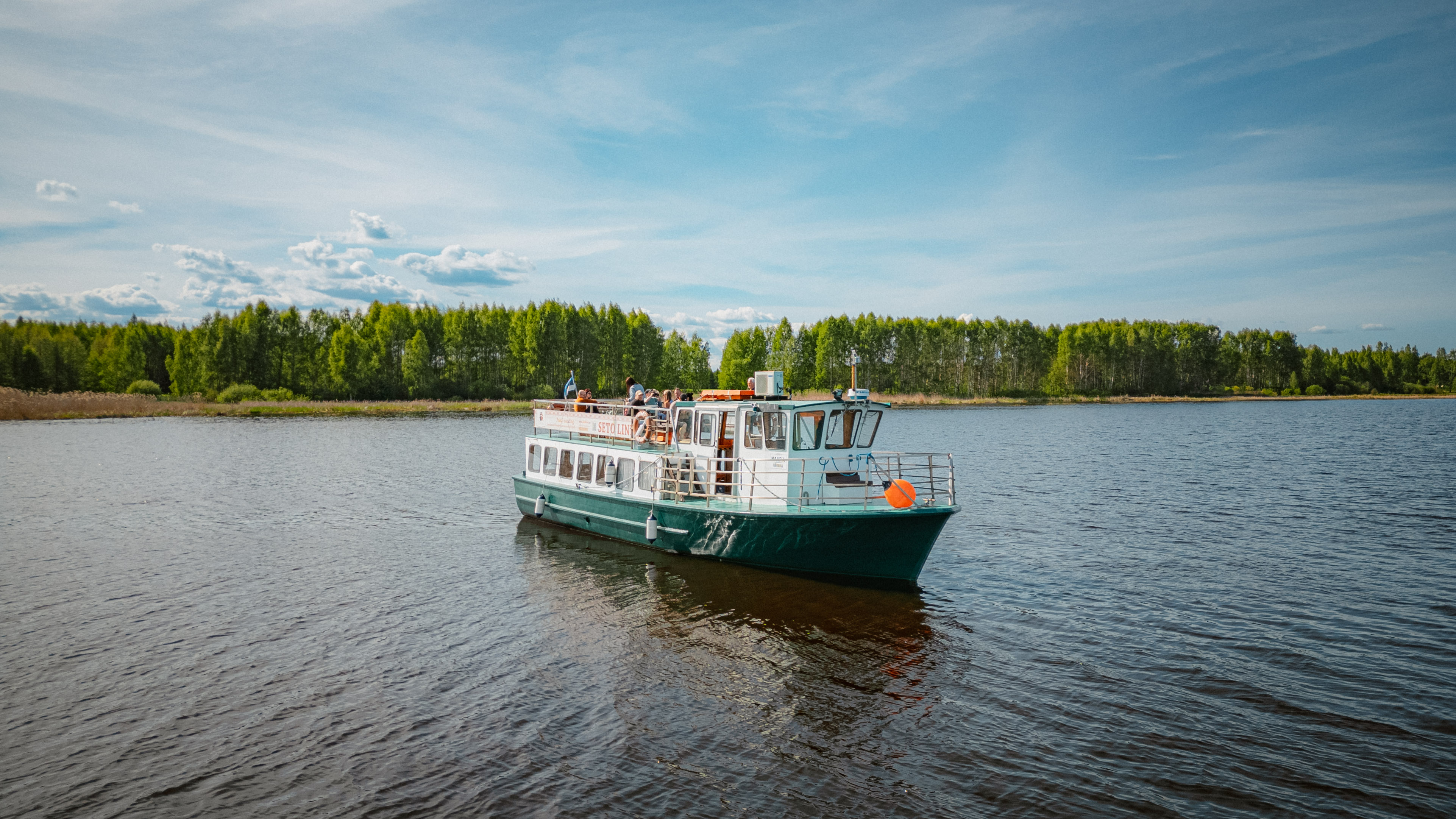
In the middle of Lake Peipsi, accessible only by boat, is a small island. Piirissaare is home to a small community of Old Believers who have maintained their traditions in a degree of isolation that has helped keep them intact. The boat trip takes around 30 minutes from the mainland. The island has no cars.

Piirissaare Old Believers Museum

Discover the charm of the Piirissaare Old Believers Museum! The Old Believers Museum is located in a historic building that once belonged to Kirill Smirnov, the clergyman of the Saare village parish. You can see a traditional Old Believer home in the museum and learn about Old Believer culture through artifacts, prayer books, and icons. The museum also organizes exhibitions that provide an overview of the history of Piirissaare. You can drink samovar tea at the museum and try Old Believer treats, including fish soup and Old Believer pie made from fish caught in Lake Peipsi.

  • Guided tours
  • Boat trips
  • Walking tours

Mesi Tare day trip: Boat trip to Piirissaar in Lake Peipsi

The host of Mesi Tare will take your group on an adventure to Piirissaar, a small island in Lake Peipsi! We start from the Varnja Harbor, where the host will be waiting with a fishing boat. The boat trip lasts two hours, depending on the weather and water level. We will walk with a guide through Piirissaar's three villages and see all the important places on the island, including the Piirissaare Old Believers Museum, the location of the Old Believers' prayer house, the Orthodox church and the Piirissaare Titanic. For lunch, the guide will take you to Zinaida's home, where she will lay out a magnificent table for her guests. (Note: The food must be paid for on the spot.) The day ends with a boat trip back to Varnja.

Seto Line Day Trips to Piirissaar

During the summer months, we depart on selected dates at 9:00 AM from the quay next to the Tartu Market Hall for a journey to Piirissaar. Piirissaar is the only permanently inhabited Estonian island in Lake Peipsi. The north-eastern part of the island has three villages (Piiri, Tooni, and Saare). Most of the inhabitants of Piirissaar are Russian Old Believers whose main activities include fishing and growing onions. The boat trip to Piirissaar takes 4–4.5 hours, with approximately 2 hours planned for independent exploration and dining on the island. The estimated return to Tartu is around 21:00. For the exact schedule, please visit the Seto Line Reisid website.

Lake Peipsi

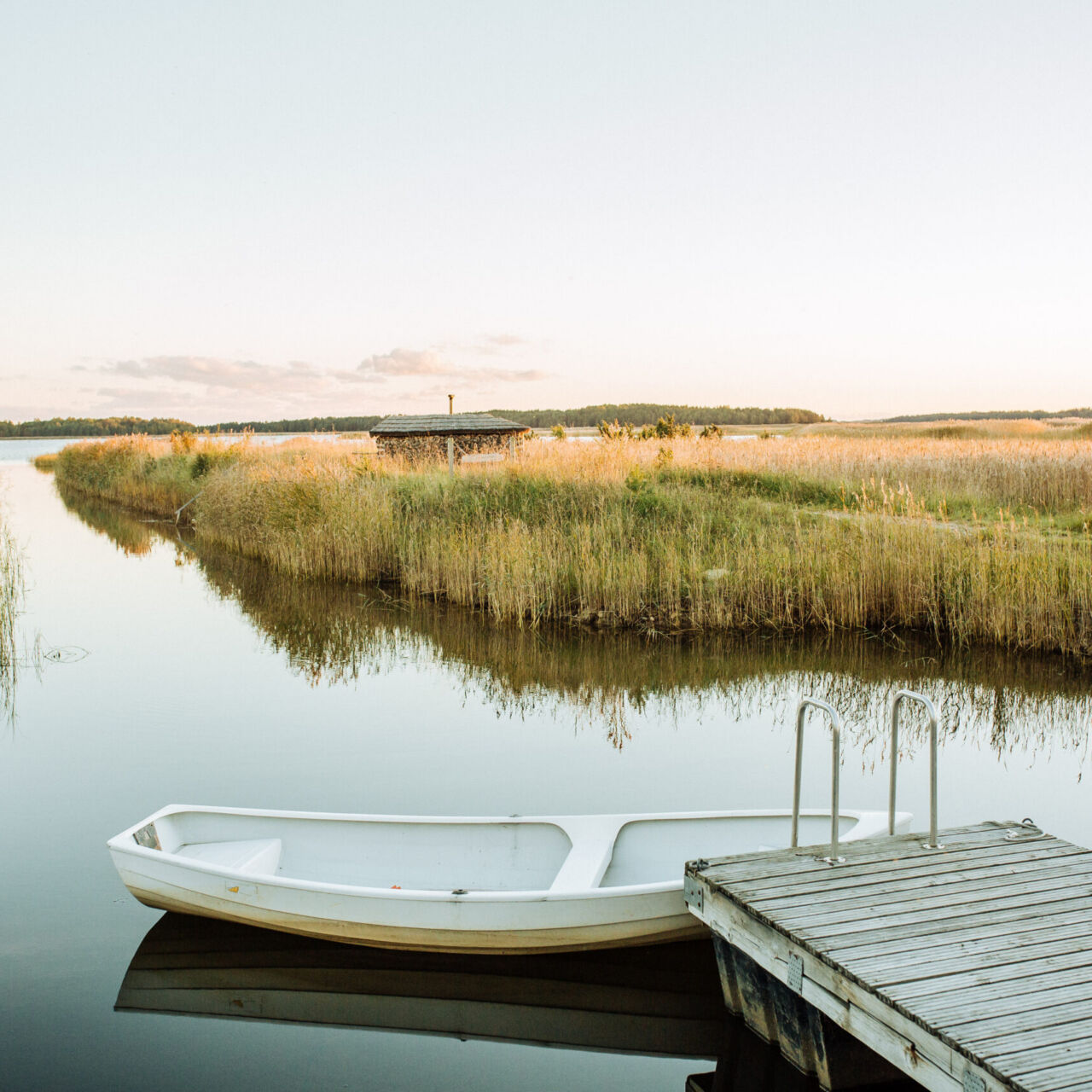
Lake Peipsi is the fourth largest lake in Europe and one of the largest freshwater lakes entirely on the continent. It sits on the border between Estonia and Russia, stretching 3,555 square kilometres between the two countries. Despite its size, it is remarkably shallow, the average depth is around 7 metres, which means it warms up quickly in summer and freezes solid in winter.

The lake has three distinct parts. The largest northern section, Suurjärv, connects through the narrow Lämmijärv to the southern Lake Pihkva, which crosses into Russia. The western shore, where the Old Believer villages sit, faces Russia across open water. On a clear day you can see the far shore.

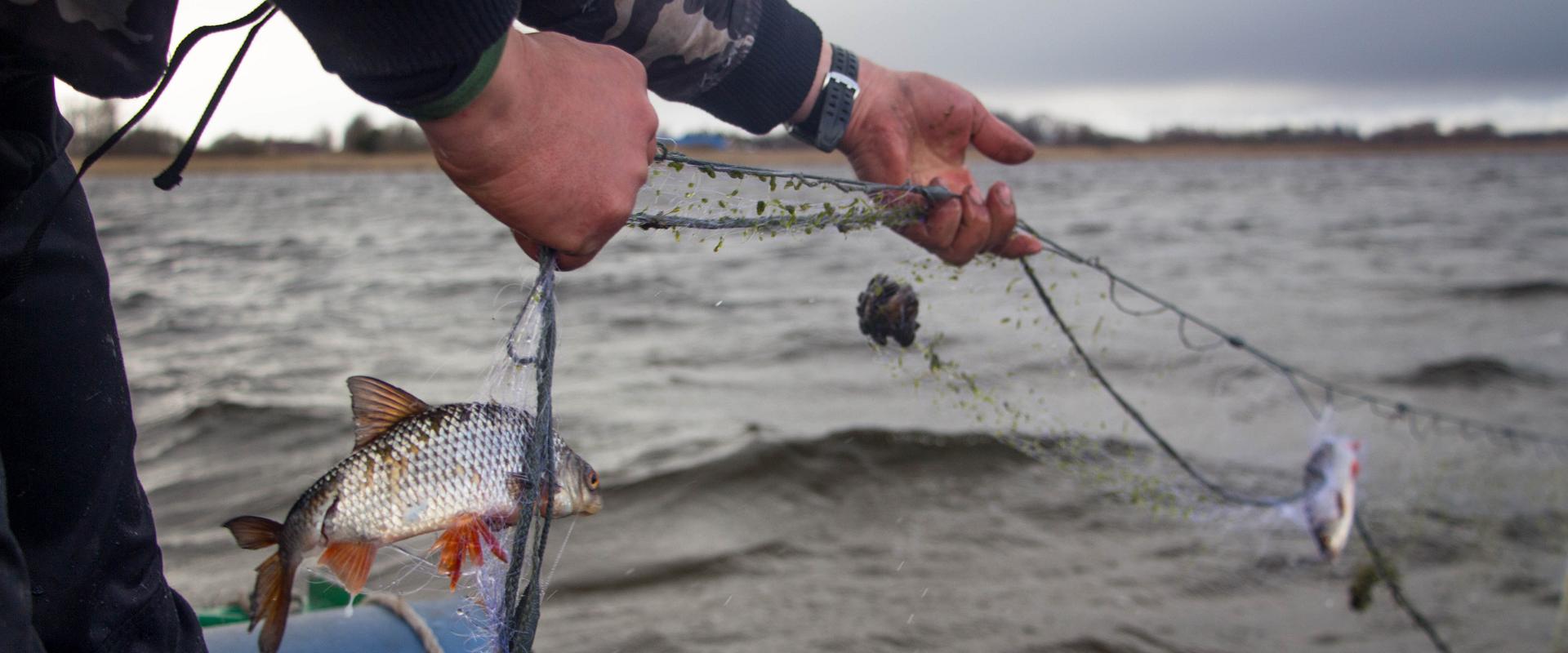
The lake is famous for its fish, particularly vendace, perch and bream. Fishing has been the backbone of the Old Believer economy for three centuries. In winter, when the ice is thick enough, locals drive out onto the lake for ice fishing, sometimes in a karakat – a homemade vehicle with enormous wheels.

Textile traditions

The Old Believers brought more than their faith when they left Russia. Among the traditions they carried with them was lubok, a type of Russian woodblock printing dating back to the 16th century. The technique involves carving an image into a wooden block, inking it by hand and pressing it onto paper or fabric. The results are bold, graphic and unmistakably old.

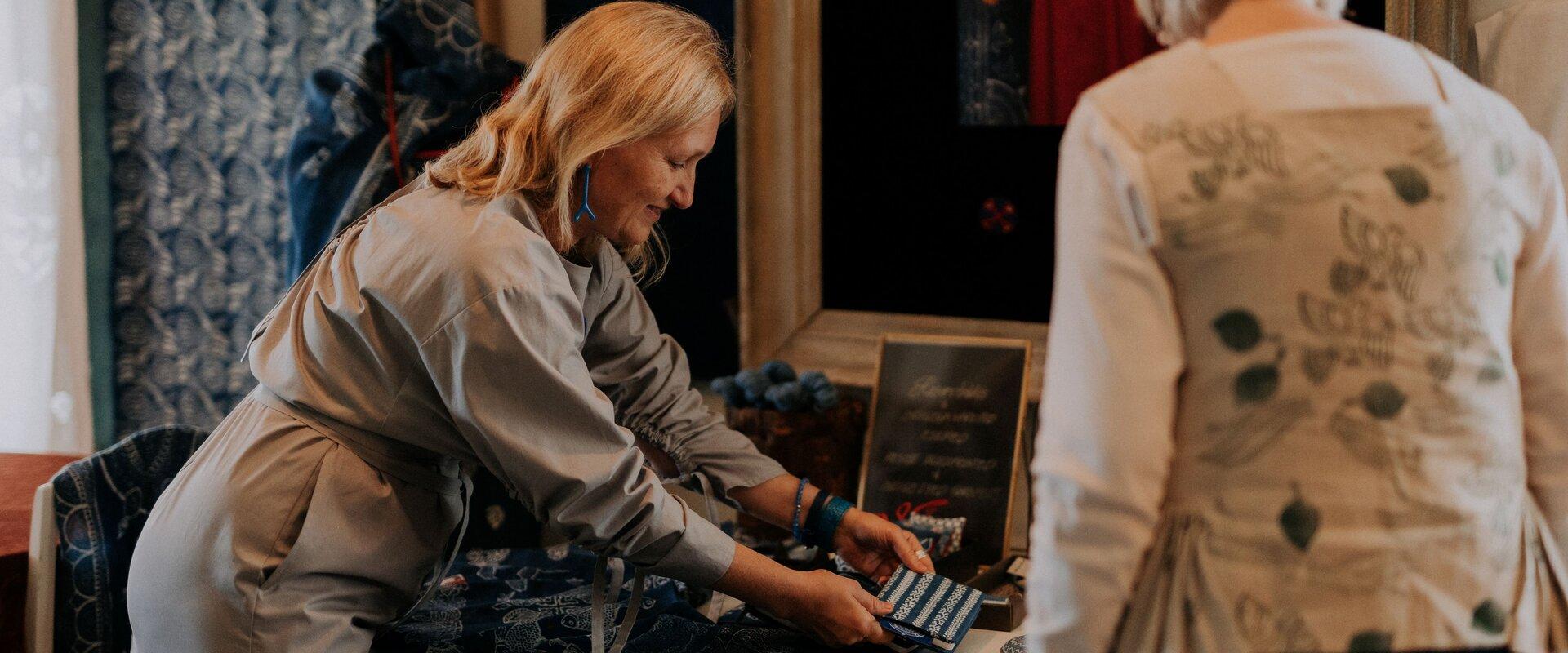
Indigo dyeing is another tradition that survived the journey and the centuries. Deep blue textiles, produced using natural indigo, were a hallmark of Old Believer craft and the technique is still taught in the villages today.

At the Peipsimaa Heritage Centre in Kolkja, you can try both. Workshops run through the season in lubok printing, indigo dyeing and traditional textile techniques. The printing press used in some workshops is built in the 15th century style. You leave with something made by hand, which is how everything here has always been made.

Good to know

Prayer services are not open to visitors. The virtual reality experience at the Kolkja Museum is the closest you can get

If invited into a home, bring your own cup and cutlery. This is a matter of religious practice, not personal preference

The Onion Road runs approximately 40 kilometres from Mustvee to Varnja

A boat trip to Piirissaar takes around 30 minutes and should be arranged in advance

Lake Peipsi borders Russia. The water is shared, the border is real. Stay on the Estonian side

In winter, the ice on Lake Peipsi is thick enough to walk and drive on. Locals use a special truck called a karakat, with extra big wheels, for ice fishing trips or to go for a winter drive on the lake.

Lake Peipsi is famous for its whitefish and perch. You can go fishing on the lake and, if it goes well, enjoy a meal you caught yourself.

The Peipsimaa Museum in Mustvee offers workshops in painting icons, making Ivan Chai, cooking sugar and making traditional onion braids.