• Explore
    • Nature
    • Culture
    • Food
    • Family
    • Activity
    • Blog
  • Plan
    • Tourist info
    • Accommodation
  • For professionals
    • For professionals
    • Collaboration
    • News
    • Projects
    • Training
    • Repository
    • Community (opens in new tab)
    • Contacts
ENG
  • EnglishENG
  • EestiEST
  • LatviešuLAT
  • РусскийRUS
  • SuomiFIN
ENG
  • EnglishENG
  • EestiEST
  • LatviešuLAT
  • РусскийRUS
  • SuomiFIN
Popular searches:
Show all
  • History & Culture
  • Art & design
  • Monuments

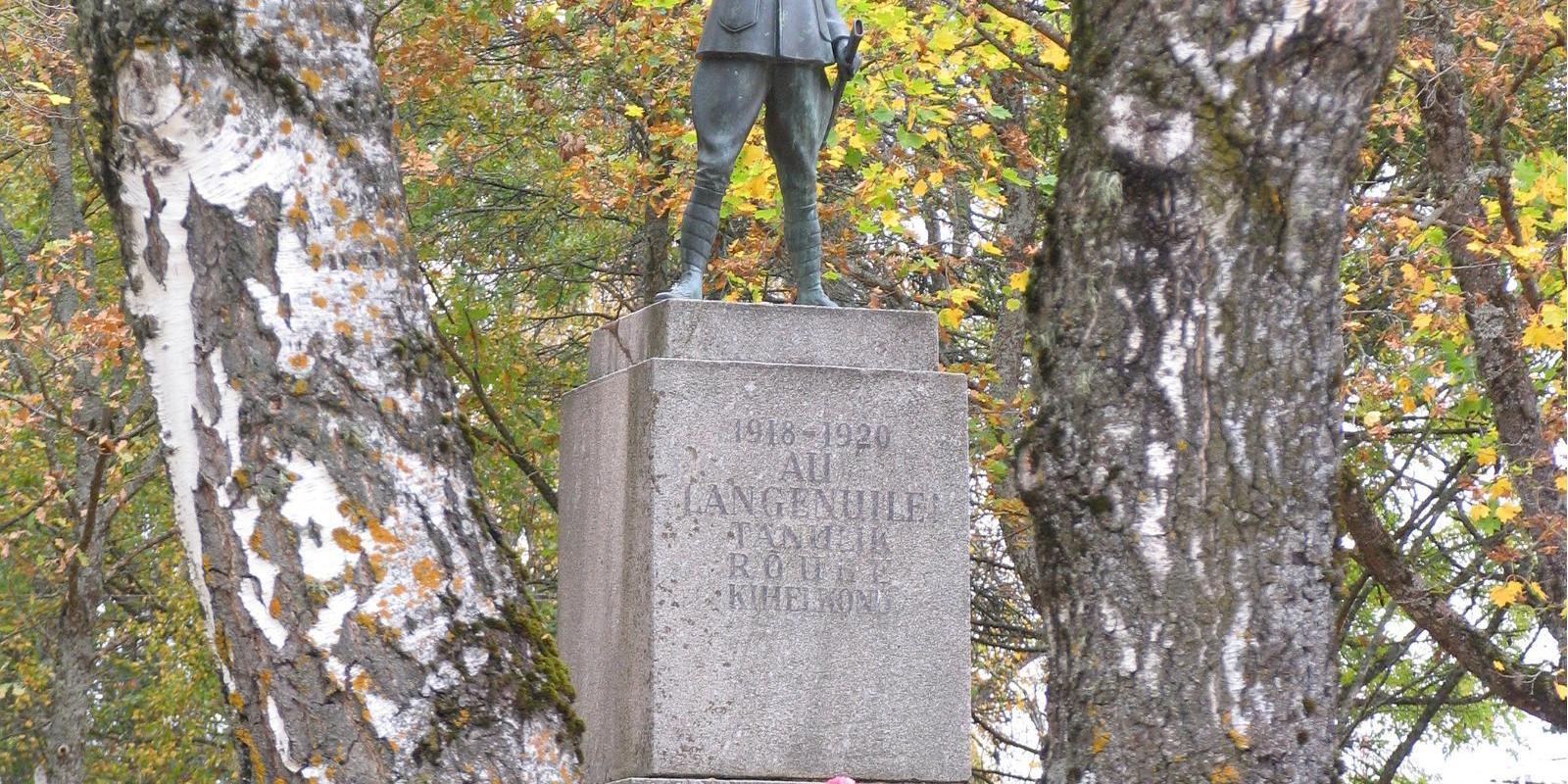
War of Independence Memorial in Rõuge

Metsa tn 1, Rõuge vald, Võru maakond, 66201

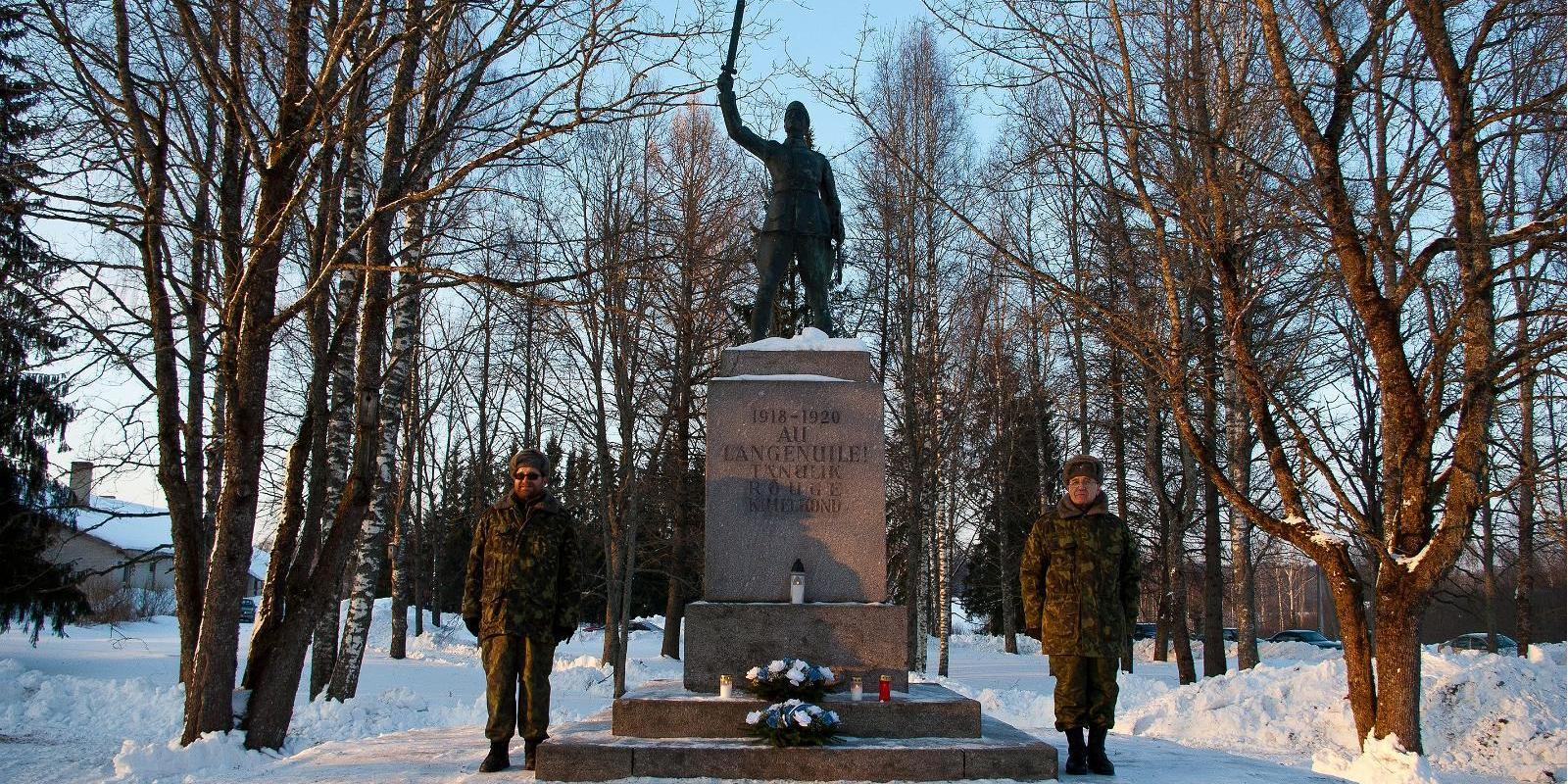
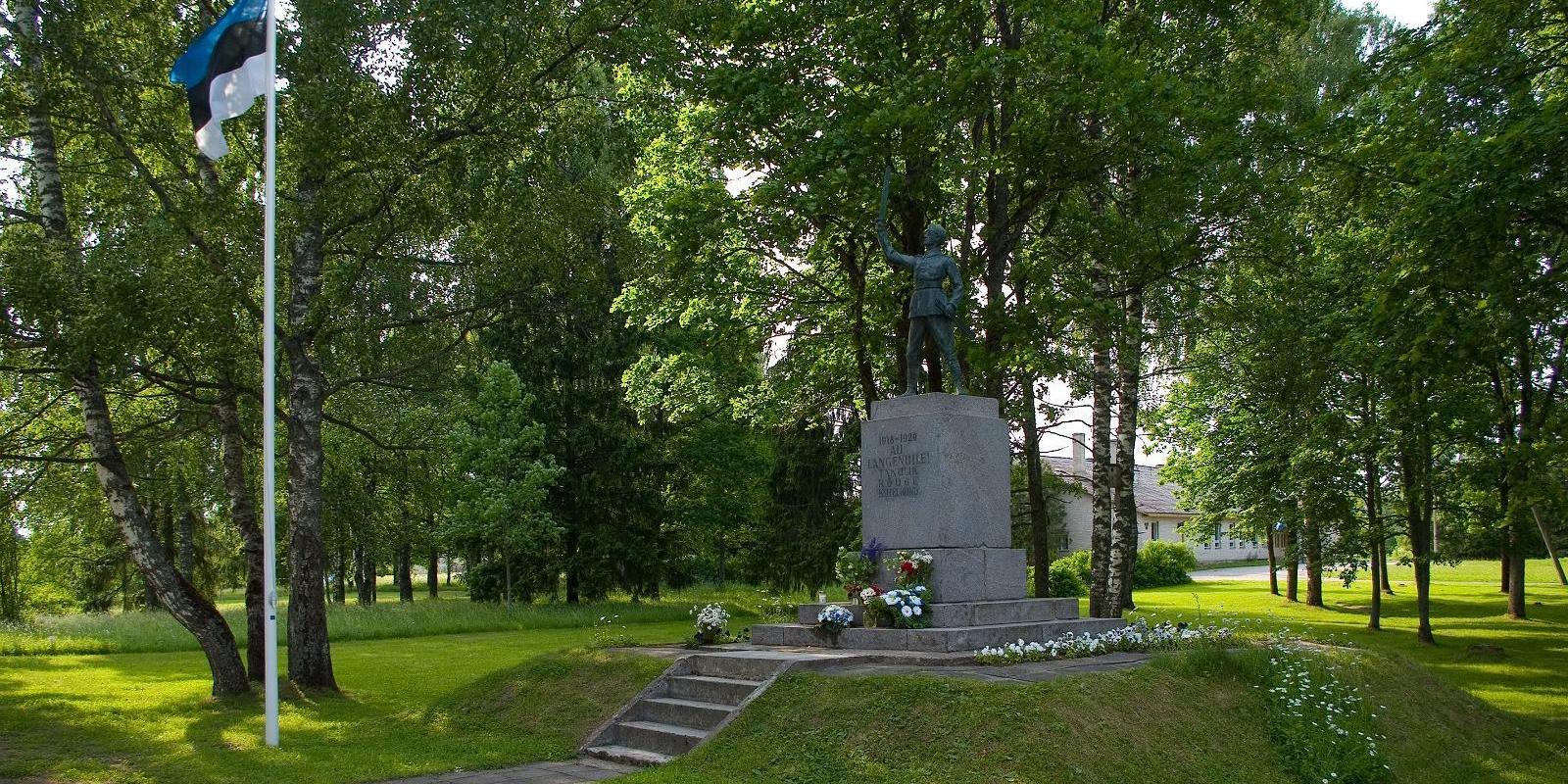
In 1926, on the initiative of pastor Valter Viks, a memorial to the 200 citizens of Rõuge who were killed in the War of Independence, designed by artist Voldermar Mellik, was erected near the Rõuge Church. The Estonian text engraved in the stone on the front of the memorial reads “1918-1920. Honour the Fallen! Your thankful Rõuge parish”. In 1945, the Bolsheviks blew up the memorial, and the bronze soldier and its foundation stones were buried in the ground near the monument. A local artist Aksel Ollmann dug the bronze statue out under the cover of night and hid it on his farm. In 1988, the statue was dug up from its hiding place. The memorial was re-inaugurated on 30 October 1988. The statue was restored by Ars Monumentaal. 
Amenities

  • Free parking

Open times

Throughout the Year

Around the Clock

Contact

  • +372 5331 1442

Links

See more

  • Monuments

Monument to Friedrich Robert Faehlmann

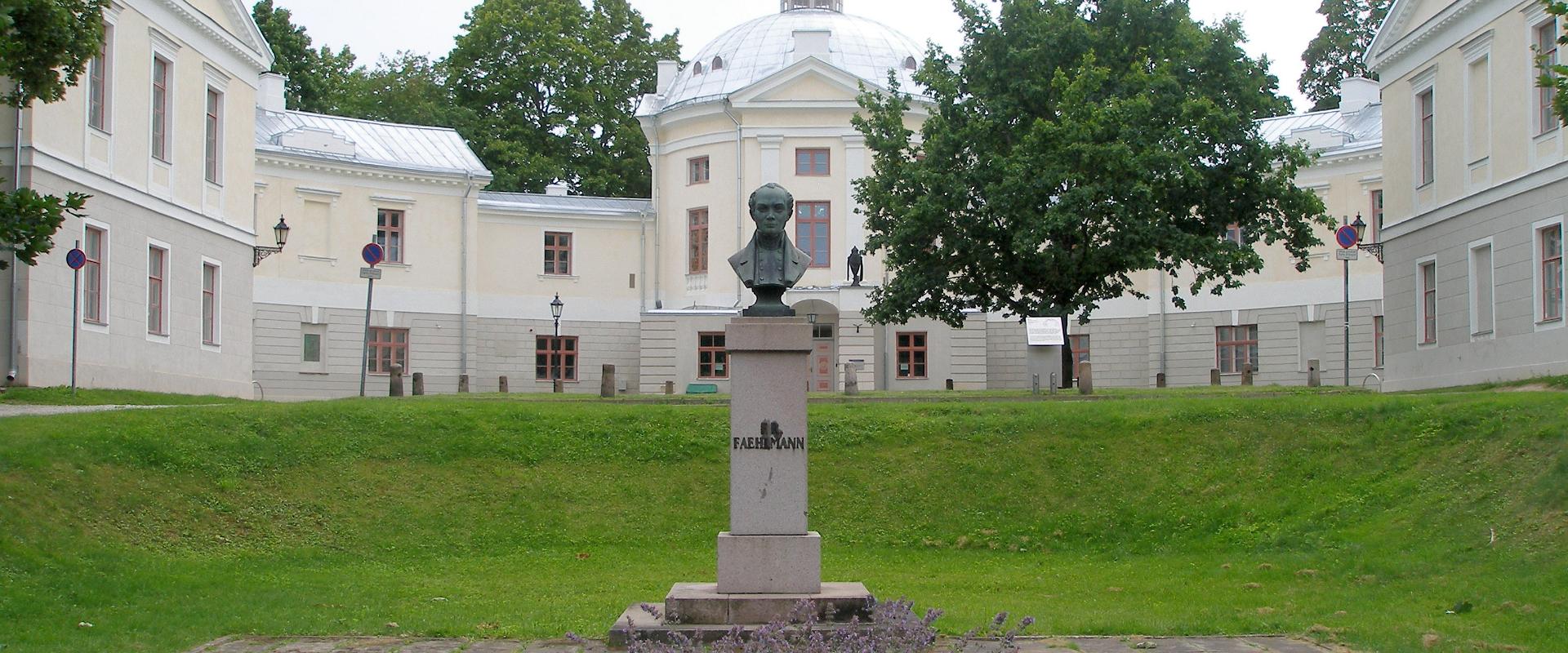
The monument to Friedrich Robert Faehlmann – a bronze bust on a pillar of local grey granite – was opened in front of the Old Anatomical Theatre at Toomemägi, Tartu, on 18 May 1930. Friedrich Robert Faehlmann (1798 - 1850) was one of the founders of Estonian national literature, a physician and a democrat. He studied in Rakvere District School, Tartu Upper Secondary School and the Faculty of Medicine in the University of Tartu. Faehlmann worked as a physician in Tartu from 1824. He worked in the Old Anatomical Theatre. He was a lector of the Estonian language in the university and sometimes also gave lectures in pharmacology and prescriptions.

  • Monuments

Monument to Jaan Tõnisson

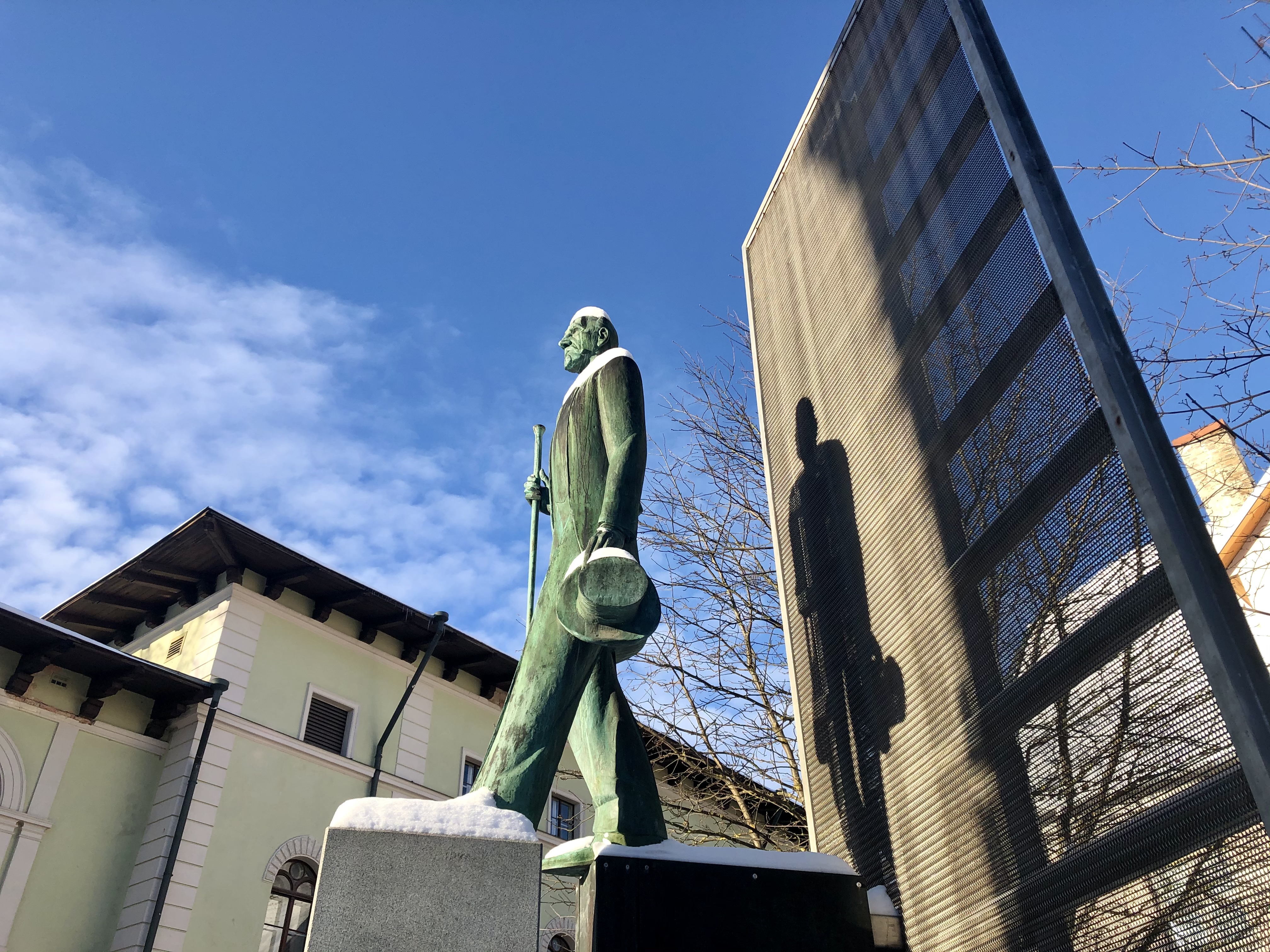
The monument to the legendary Estonian statesman and journalist Jaan Tõnisson was established in 1999. Its authors are Mati Karmin and Tiit Trummal. Jaan Tõnisson was a legendary statesman and journalist who was prime minister from 1919 to 1920, the head of state from 1927 to 1928 and in 1933, the owner of the Postimees newspaper from 1896 to 1930 and the editor-in-chief of the Postimees from 1896 to 1935. Tõnisson was made an honorary citizen of Tartu in 1939.

  • Monuments

Monument to Kristjan Jaak Peterson

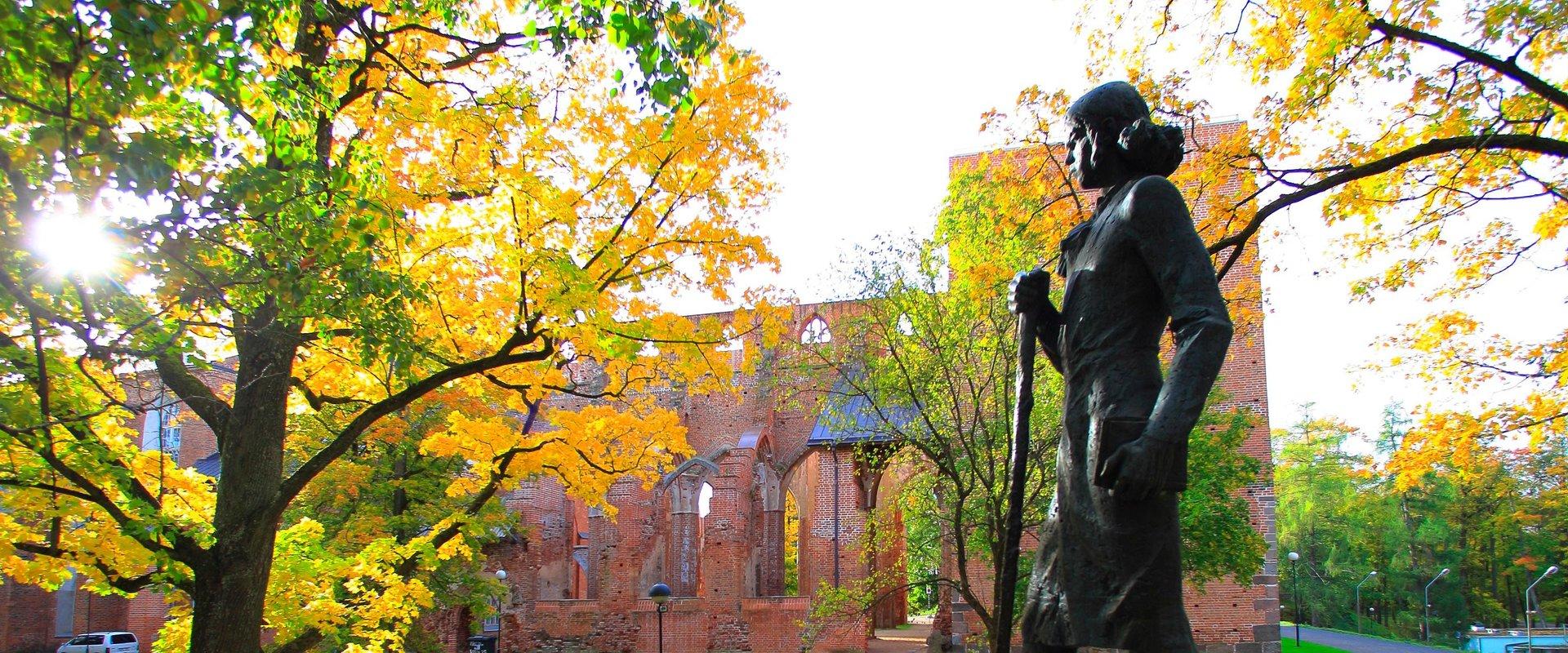
Kristjan Jaak Peterson (14 March 1801 – 4 August 1822) was an Estonian writer who is considered to be the founder of Estonian national literature.He studied in the Faculty of Theology and Philosophy of the University of Tartu from 1819 to 1820. He called himself a singer of the country people, appreciated the national features of literature, and thought that the creation of original Estonian literature was possible.There is a bronze monument to him on Toomemägi, which was completed in 1983 by J. Soans and A. Murdmaa, and a high school named after him in Tartu.On the writer's birthday, 14 March, we celebrate Mother Tongue Day.Fun fact: Peterson walked from Tartu to Riga more than 200 years ago due to lack of money.

  • Monuments

The Fr. R. Kreutzwaldi Monument and Park on the Shore of Lake Tamula

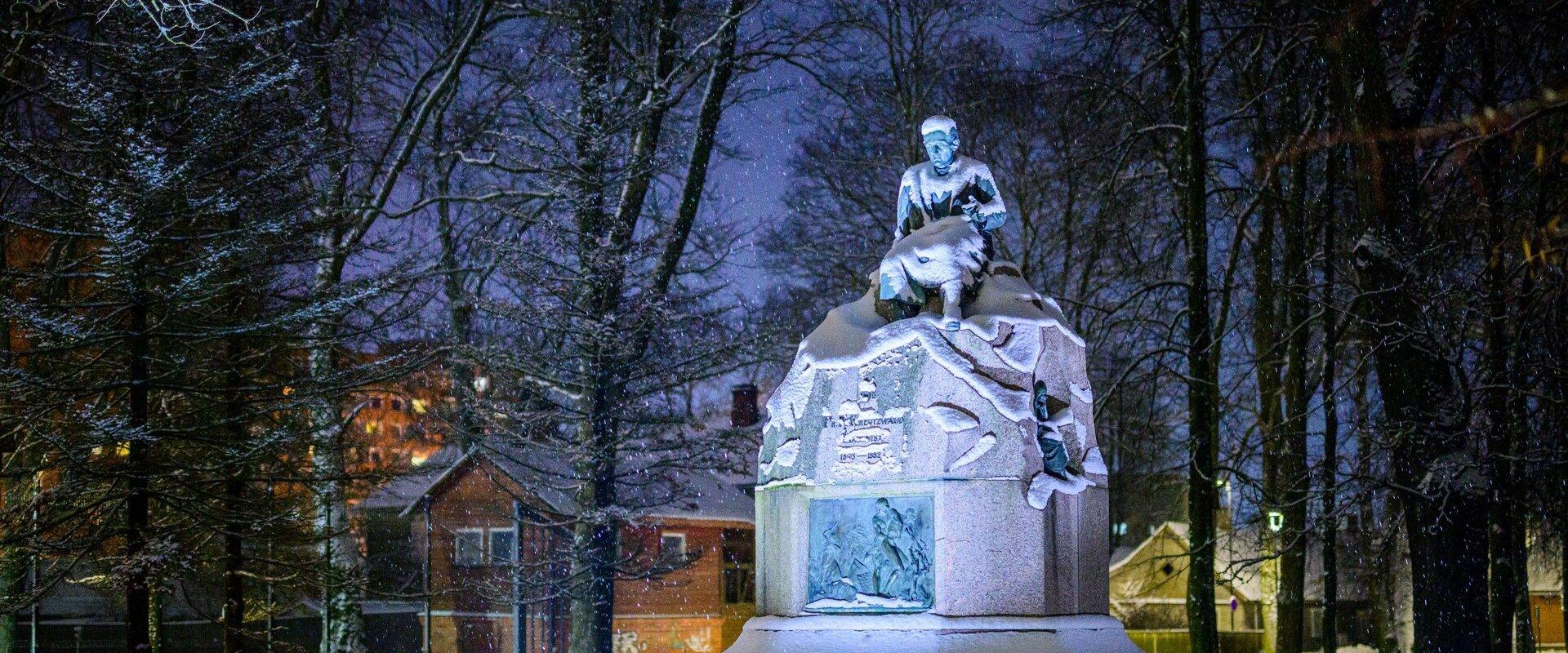
The Monument to Dr. Fr. R. Kreutzwald is located in a park on the shore of Lake Tamula. The author of the monument is A. Adamson and it was cast in bronze in Italy. The monument was opened in 1926. It is not known when the park was founded, however the age of most of the species of trees, birches and lindens is estimated at more than one hundred years. The coniferous trees in the park include spruces and firs. Lake Tamula has an oval shape in an east-west direction with an average depth of 4.2 m. The lake is deepest to the northeast of its centre (7.5 m) and has a surface area of 231 ha. There is a swimming area, beach and a beautiful promenade on the shore on the city side.

  • Monuments

Horse monument in Luunja

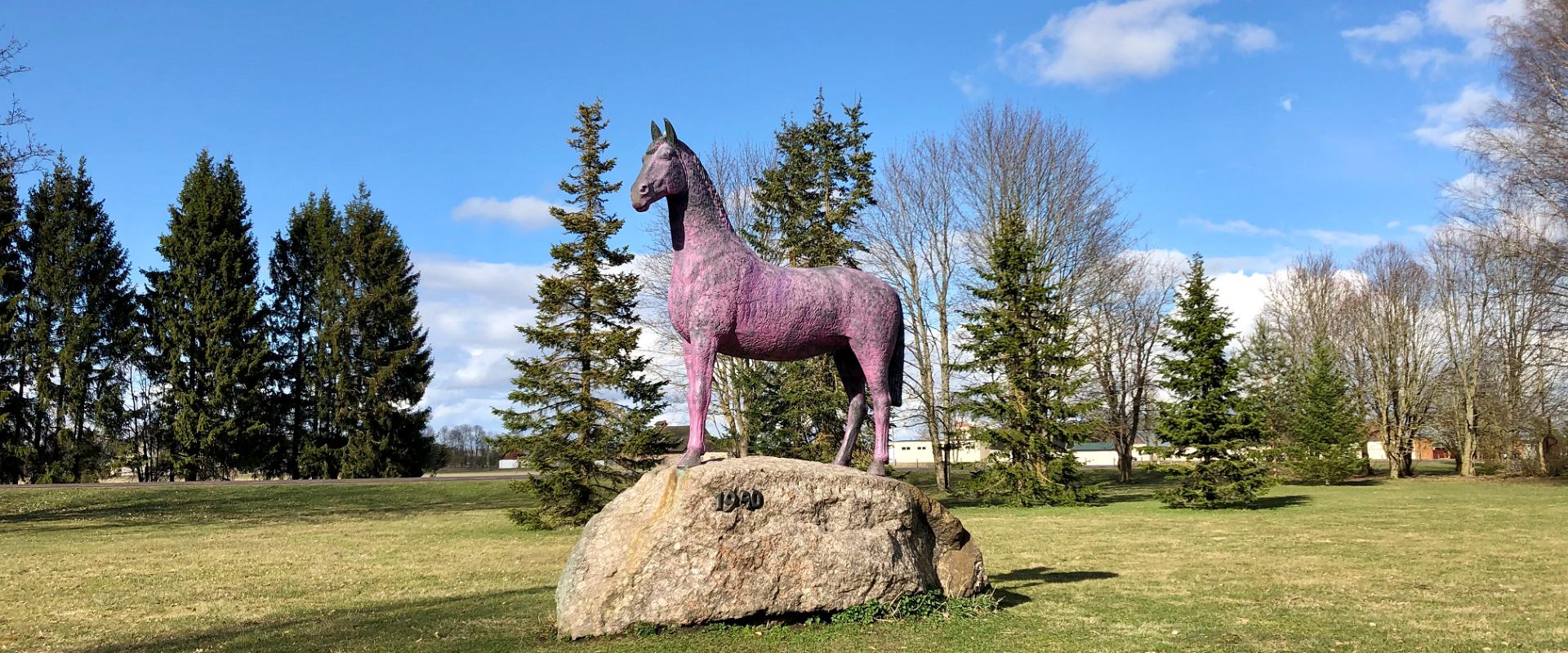
On 1 May 1990, the 70th anniversary of the state farm was celebrated in Luunja. As horse breeding and horseback riding are traditional in the Luunja rural municipality and horses are still bred in the manor, a monument was erected there to celebrate man’s best friend in agriculture – the horse. The author of the bronze horse monument is Endel Taniloo.On the night of 19 June 2017, the sculpture was painted purple. It is not known who did it. According to folk tradition, the horse became so angry it turned purple because in the course of the administrative reform, Luunja rural municipality almost had to join the city of Tartu. Fortunately, the rural municipality was able to maintain its independence.

  • Monuments

Monument of Nations

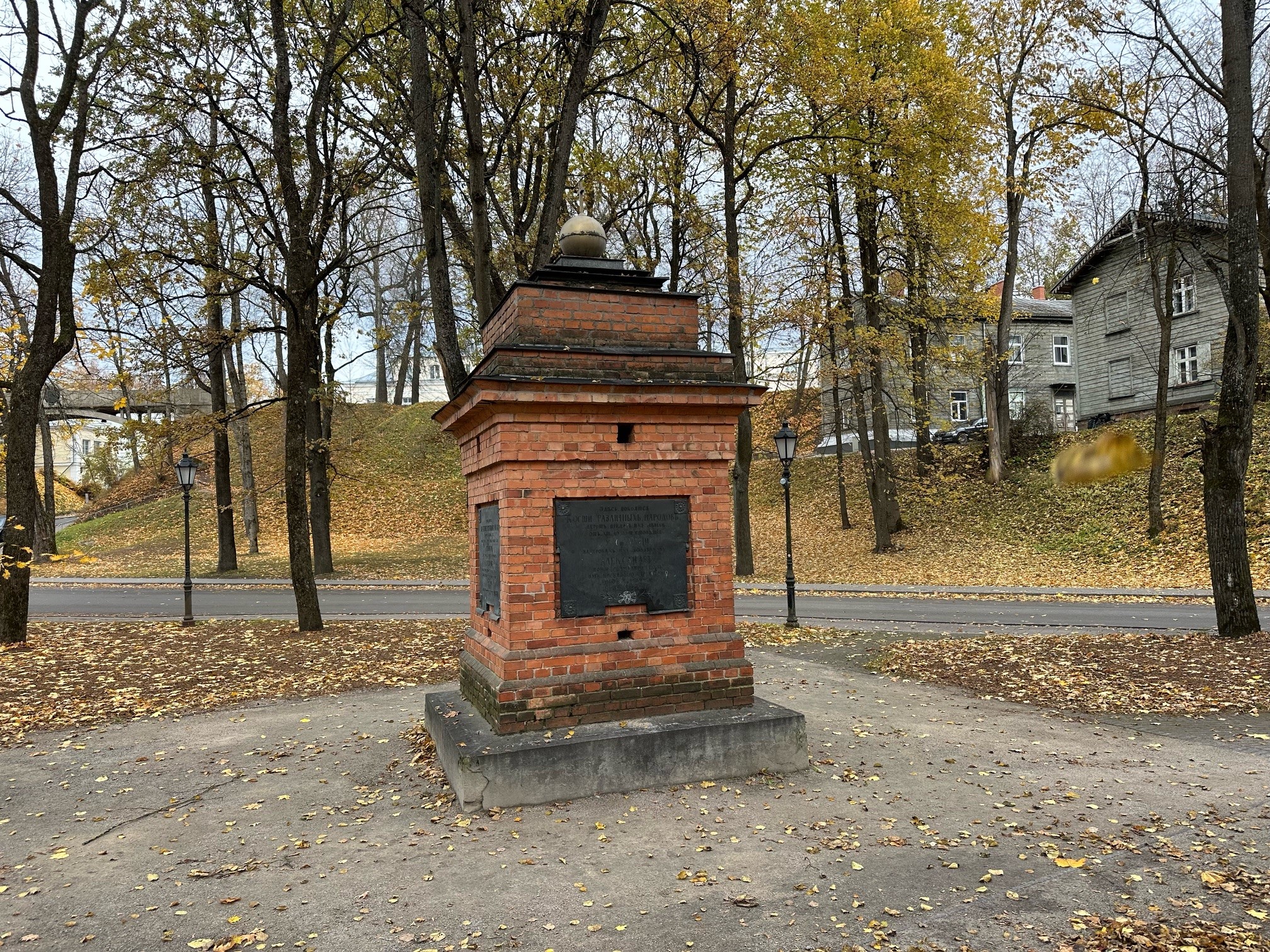
The Monument of Nation is the oldest monument in Tartu. The bones buried under the floor and in the cemetery of St Mary’s Church were found when the main building of the University of Tartu was built on the former site of the church. In 1806 they were reburied in Toomeorg near Vallikraavi Street and the small square Monument to People, which was created according to the drawings of J W Krause and resembles the tomb monuments of Asia Minor (Lykia), was erected there in 1811. The human bones found in the course of archaeological work in the cellars of the main building of the University of Tartu were buried by the monument’s side that faces street on 20 September 1985. A case with information was also buried in the grave.

  • Monuments

Kalevipoeg – War of Independence Monument

Kalevipoeg is the Estonian national epic about the adventures of the hero called Kalevipoeg.In 1950, the memorial Kalevipoeg, which was dedicated to the soldiers who lost their lives in the War of Independence, was taken down by the occupying power. The monument was built by Amandus Adamson. In 1952, the monument to Kreutzwald, the Father of Song, was erected at the same location. Discussions over restoring the memorial Kalevipoeg were held since 1988, but in 2002, when the exhibition ‘Kalevipoeg in Sculpture’ took place, the restoration proptly started. Sculptor Ekke Väli modelled the momorial on the basis of photos, and he was consulted by Endel Taniloo, a senior sculptor, during the restoration of Kalevipoeg.

  • Monuments

Cornflower – Monument to the Victims of Stalinism

The Cornflower (or Broken Cornflower) memorial to the victims of Stalinism was established in 1990 and its author is P. Saar.On top of the granite boulders is a broken cornflower (Estonian national flower). Black stripes run through the grey stone parquet of the square. They depict the railway tracks that symbolise deportation to Siberia. The waterworks of the monument make it possible for water to drip off the petals of the cornflower, like tears.The monument, which was initially erected on the corner of Riia and Pepleri streets in Tartu by the association of freedom fighters Memento, was reopened in its new spot at Pepleri 27. The monument is located next to the grey building. During the Soviet era, a KGB remand prison was located there, where the deportation of many Estonians to Siberia began.

  • Collaboration
  • News
  • Contacts
  • Privacy Policy
Join our mailing list!

"*" indicates required fields

This field is for validation purposes and should be left unchanged.
I authorise marketing

Southern Estonian Tourism Cluster

info@visitsouthestonia.com