• Explore
    • Nature
    • Culture
    • Food
    • Family
    • Activity
    • Blog
  • Plan
    • Tourist info
    • Accommodation
  • For professionals
    • For professionals
    • Collaboration
    • News
    • Projects
    • Training
    • Repository
    • Community (opens in new tab)
    • Contacts
ENG
  • EnglishENG
  • EestiEST
  • LatviešuLAT
  • РусскийRUS
  • SuomiFIN
ENG
  • EnglishENG
  • EestiEST
  • LatviešuLAT
  • РусскийRUS
  • SuomiFIN
Popular searches:
Show all
  • History & Culture
  • Art & design
  • Sculptures

Sculpture ‘Countrywomen’ (Maanaised)

Raekoja plats 18, Tartu linn, Tartu maakond, 51004

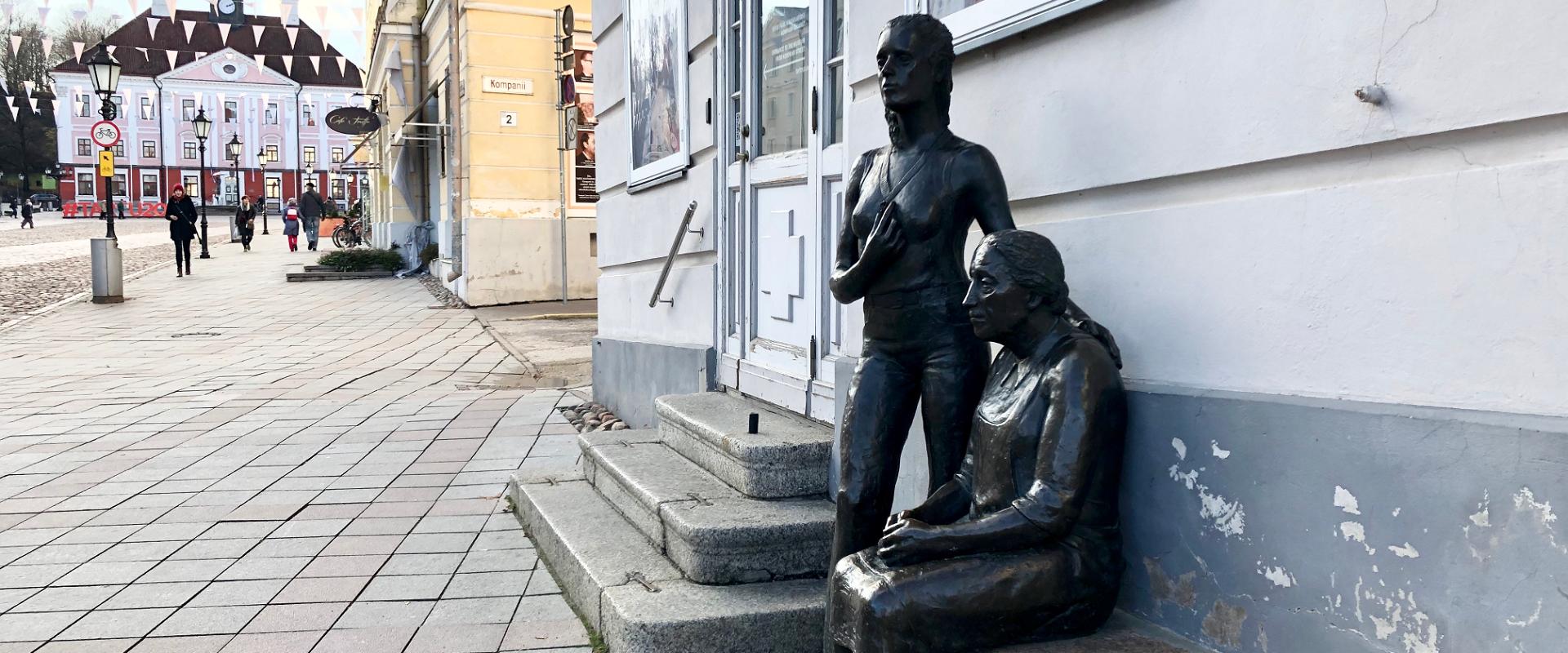
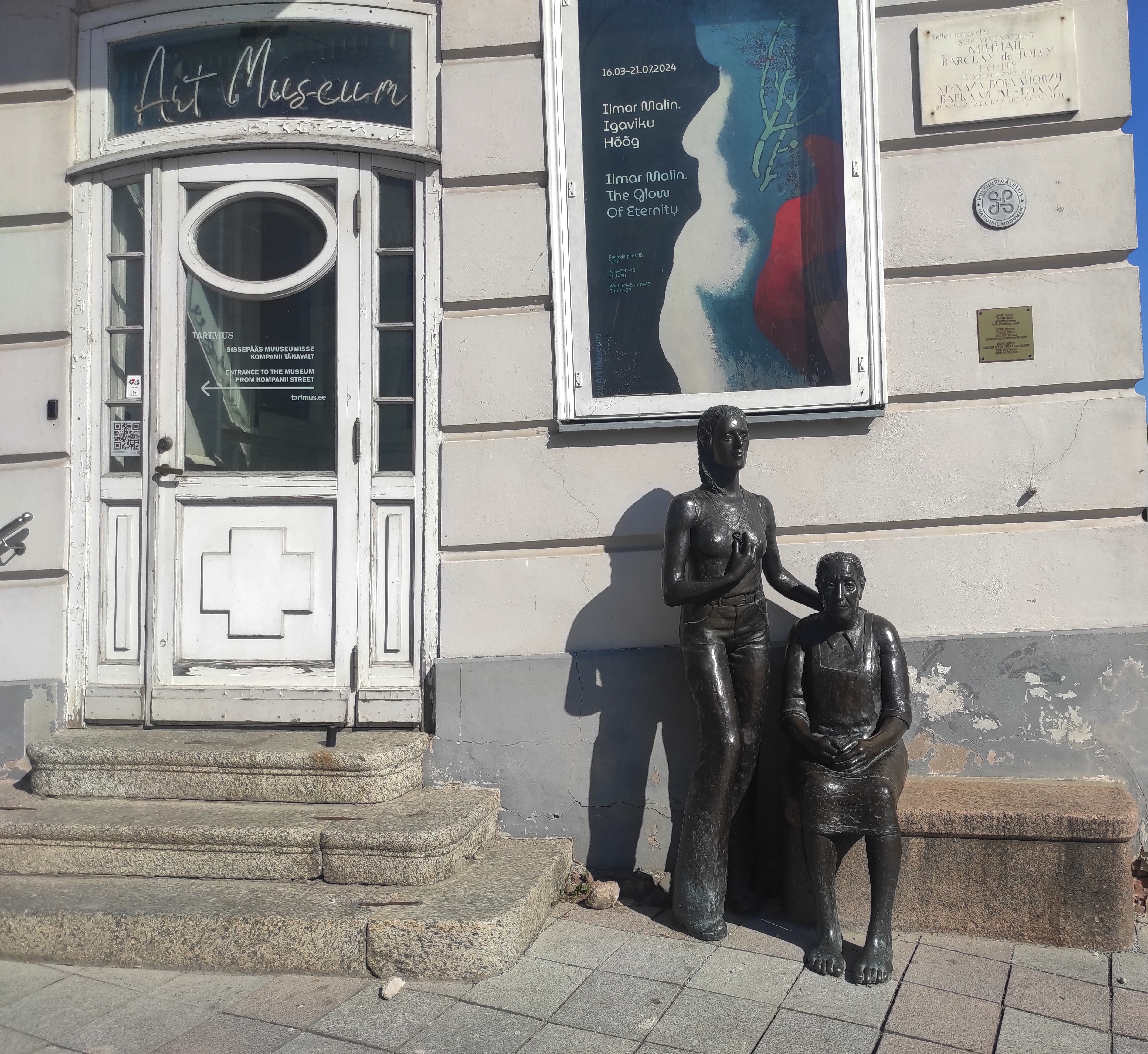
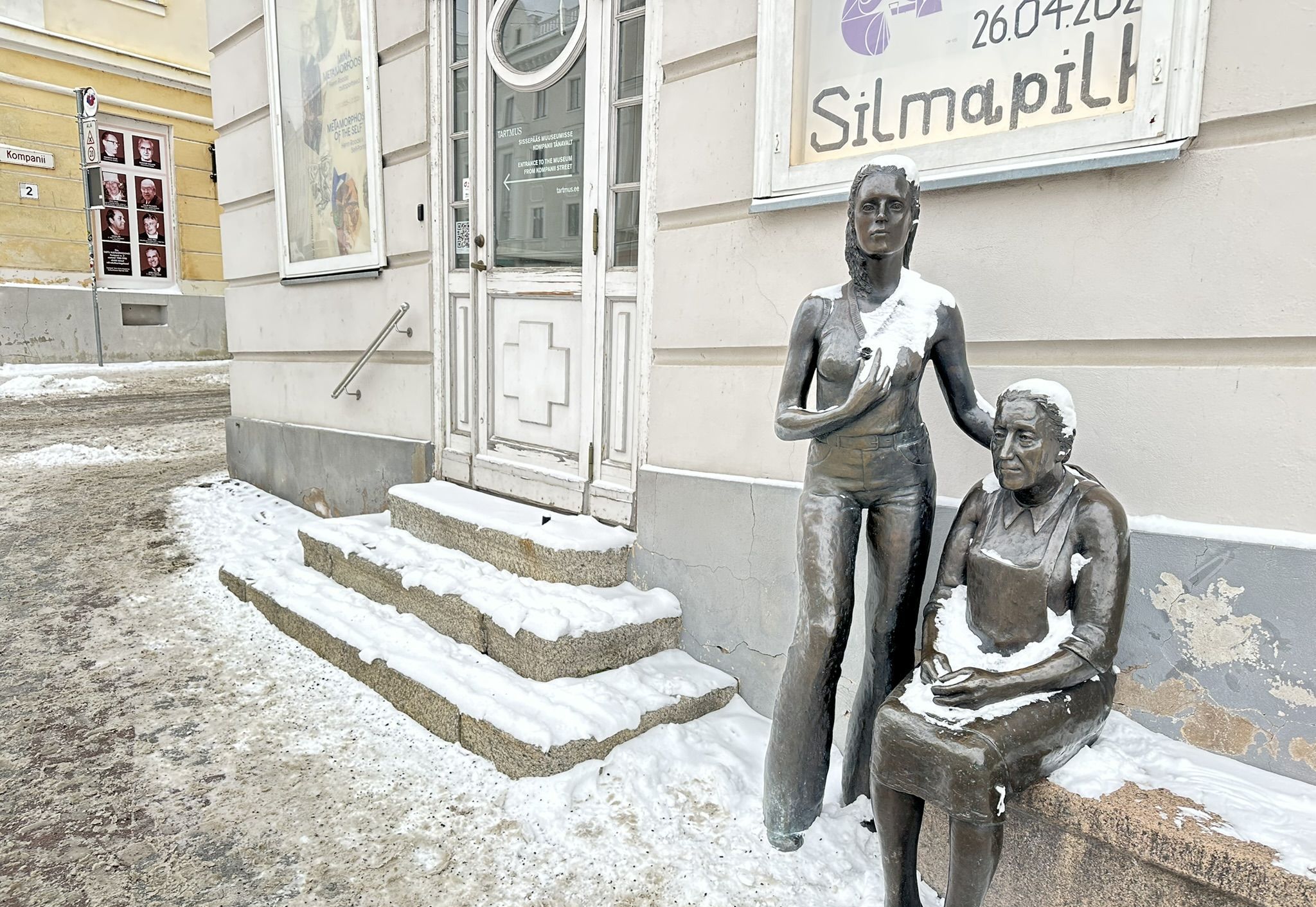
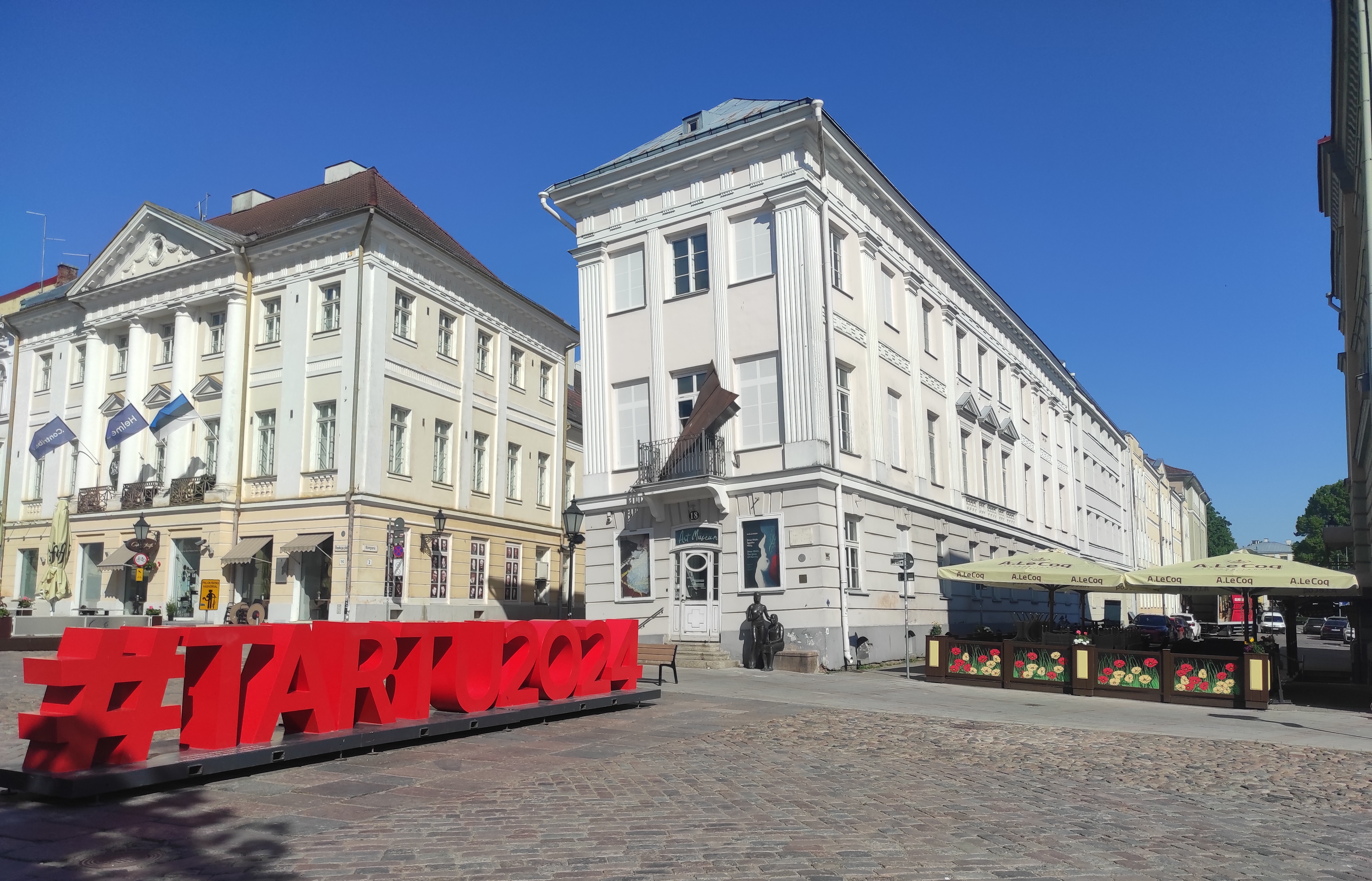
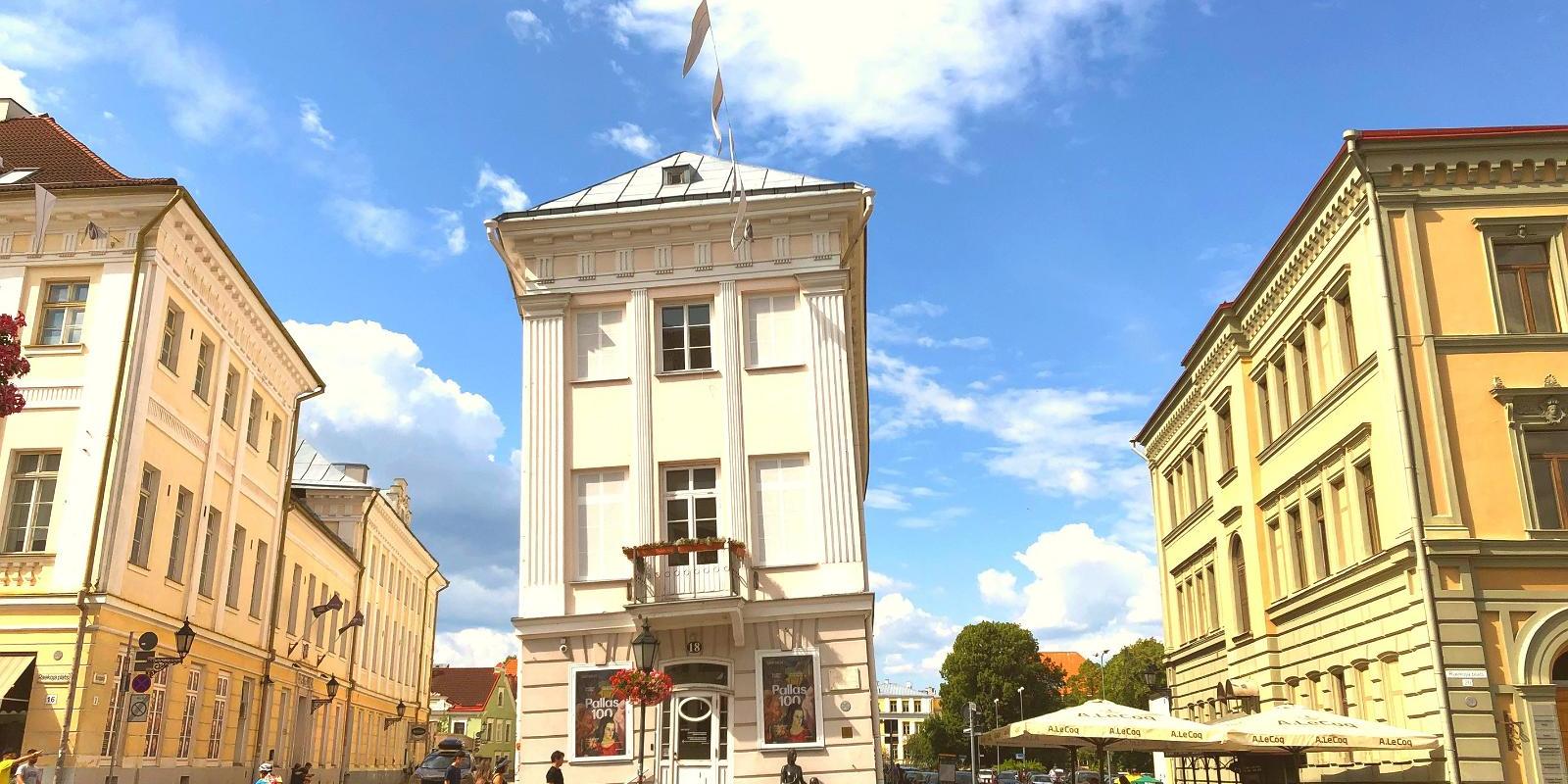
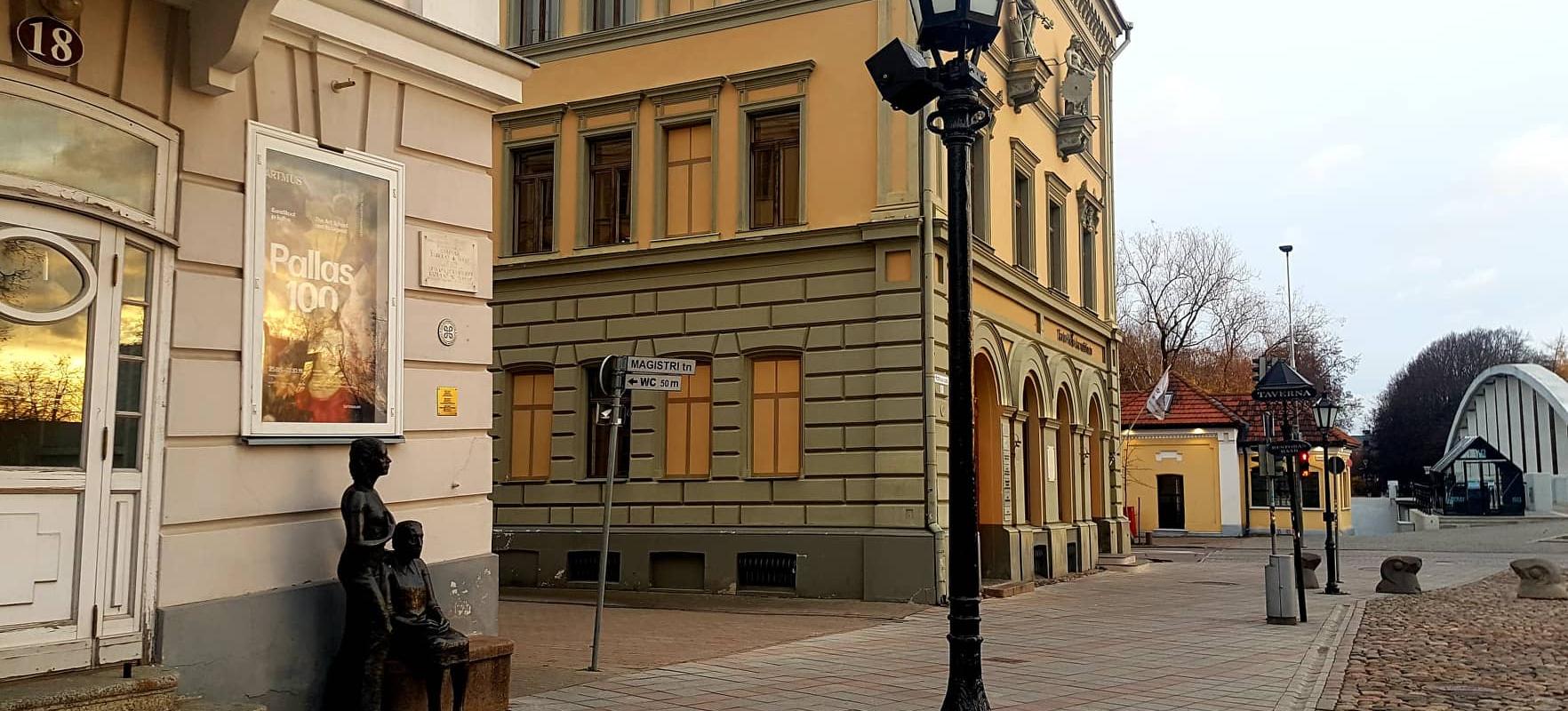
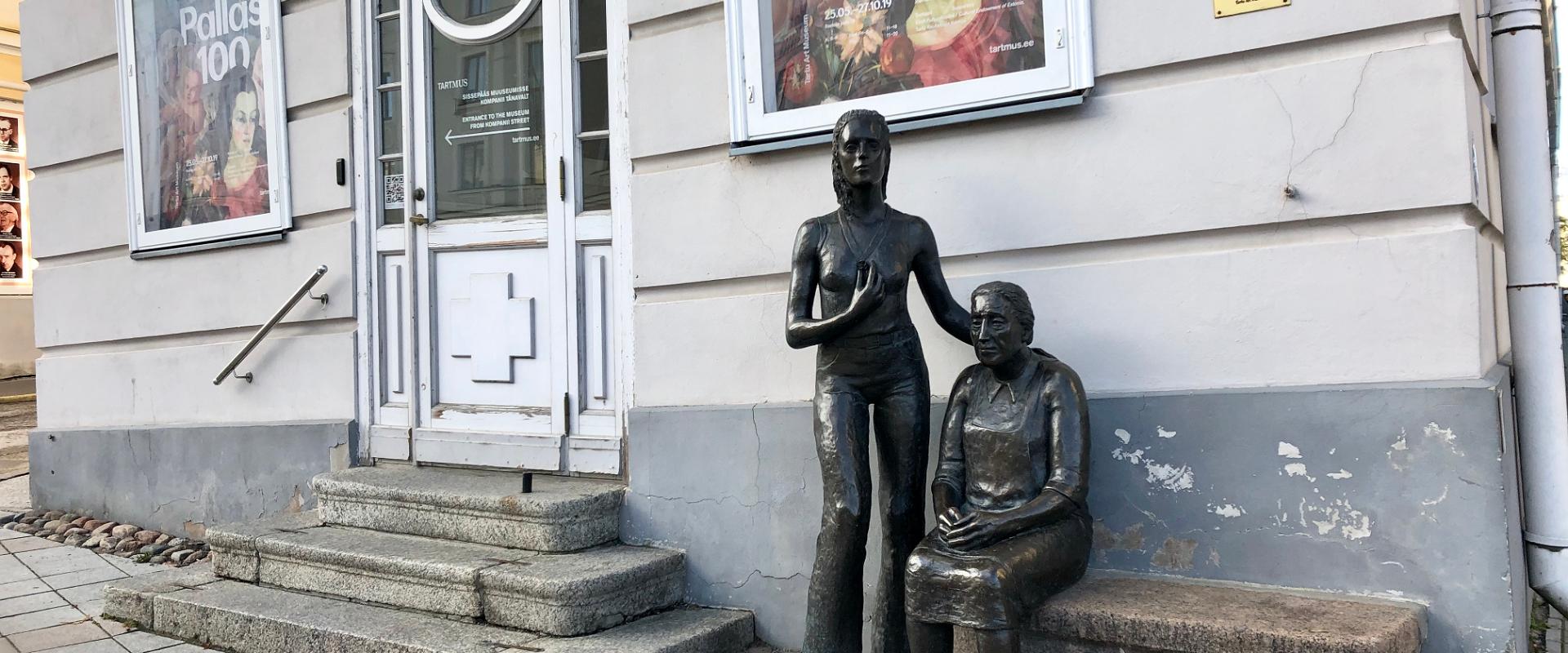
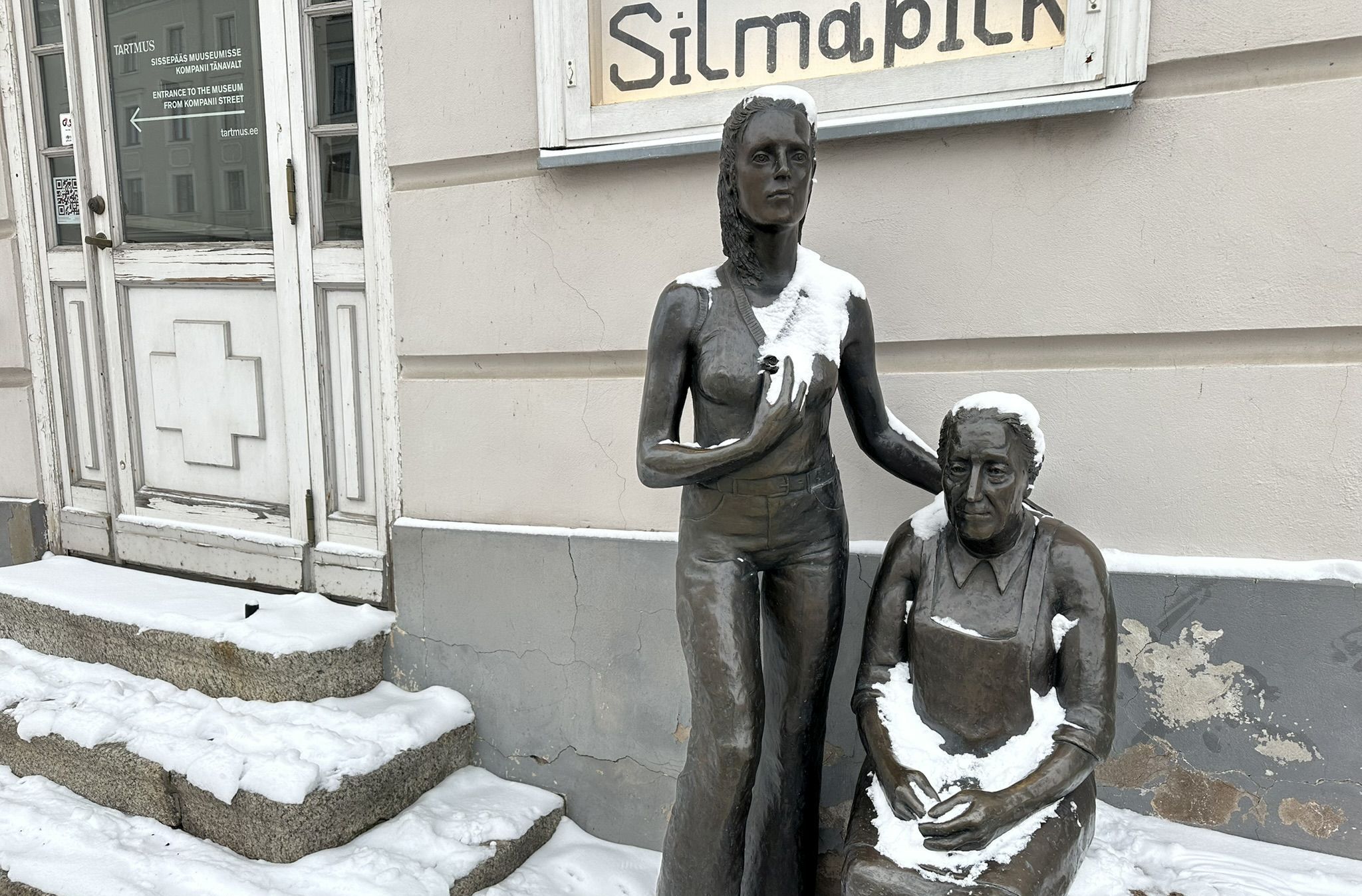
‘Countrywomen’ is a group of sculptures by sculptor Mare Mikofi, completed in 1974, which has been on display at the Town Hall Square in front of the Tartu Art Museum since 2013.It depicts two women, the older one sitting and being content and exhausted, and the other, the younger, standing beside her, empathetically holding her arm around the older woman’s shoulder. The difference between the generations is strongly reflected in their clothing – the younger is wearing trousers, a light vest and platform shoes, and the older one is wearing a dress and an apron, leaving her feet bare.The installation of ‘Countrywomen’ celebrated the 25th anniversary of the Tartu Art Museum in the Leaning House.
Open times

Throughout the Year

Around the Clock

Contact

  • +372 5881 7811
  • tartmus@tartmus.ee

Links

tartmus.ee

See more

  • Sculptures

Nipernaadi sculpture in Valga

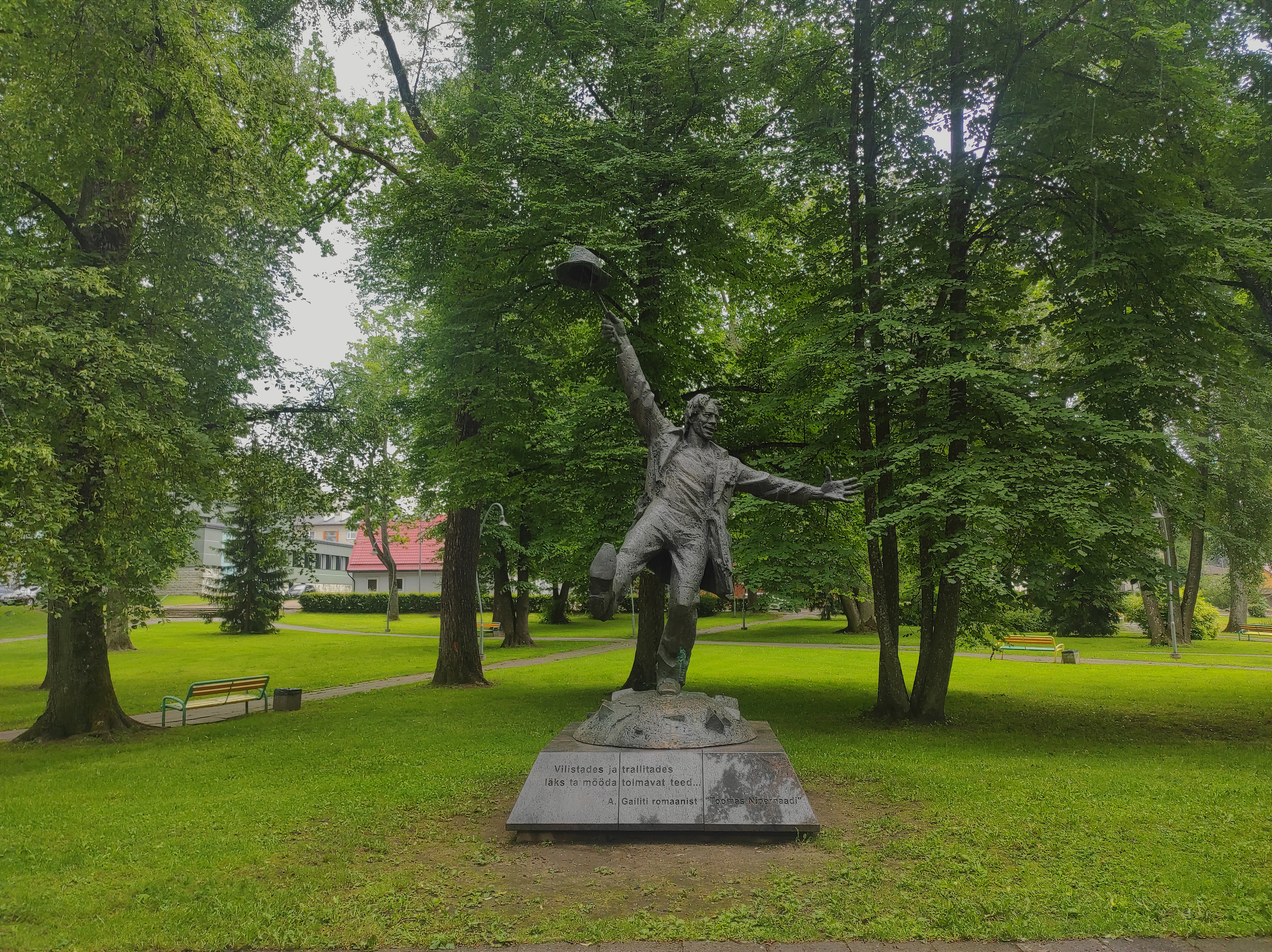
NIPERNAADI, the eternal wanderer and dreamer, greets visitors and boldly raises his hat in the Säde park. Look at the sole of his raised travelling boot and you'll see adventurous roads awaiting for you. If you manage to polish even the smallest part of it you will always have good luck accompanying your travels. Look into his eyes and you'll start dreaming, too. If you happen to meet his eyes for a bit longer your longing will be filled with something beautiful and unusual. Wave him as you leave and adventures will follow.NIPERNAADI, a vigorous bronze sculpture inspired by the protagonist of the novel "Toomas Nipernaadi" by August Gailit is anxious to meet you.

  • Sculptures

Group of sculptures to celebrate the birth of the 100,000th resident of Tartu

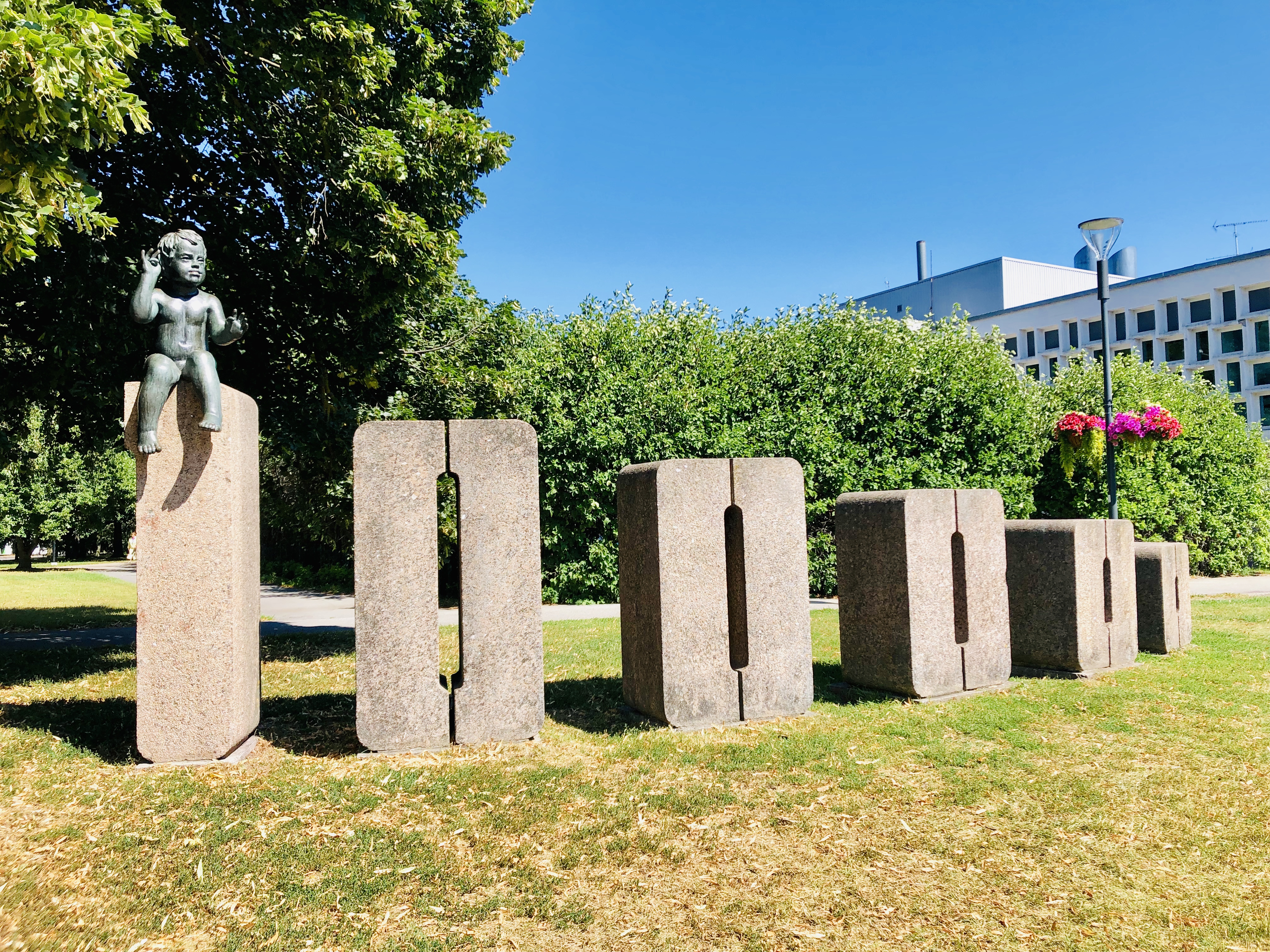
The monument consists of the number 100,000 carved of granite with the bronze sculpture of a child sitting on number 1. The monument celebrating the birth of the 100,000th Tartu resident was initially located in the green area between the former Restaurant Kaunas and the Võidu Bridge. The monument was moved onto the banks of the Emajõgi River between Atlantis and Kaarsild.

  • Sculptures

Catherine II Sculpture and Catherine Alley (Katariina allee)

The sculpture of Russian Empress Catherine II (sculptor Jaak Soans) was installed on the renovated Catherine Alley in 2014.The city of Võru was established as the centre of the newly created county under the new Provincial Governance Law of 1784. Catherine II personally gave a number of orders for the founding of a new city and affirmed the coat of arms of the city. The avenue from the first house of Võru town, the main building of the manor belonging to von Mengdens (Võru upper secondary school) to Lake Tamula, is shown on very early maps of Võru city. Catherine Alley connects the city's central square with Kreutzwald Park and Tamula Lake's promenade.

  • Sculptures

Statue of Oskar Luts

The monument to Oskar Luts was erected in 1987. The authors of the monument were A. Rimm and A. Murdmaa.Oskar Luts (1887–1953) was an Estonian writer. His best known and loved novel is Kevade (Spring), a lyrical and humorous tale based on school memories. He has also written plays, children’s stories, memoirs, and feuilletons. The writer's house museum is located at 38 Riia Street in Tartu. There, he lived for the last 17 years of his life. Oskar Luts was buried in the St Paul’s Cemetery in Tartu.

  • Sculptures

‘The Kissing Students’ sculpture and fountain

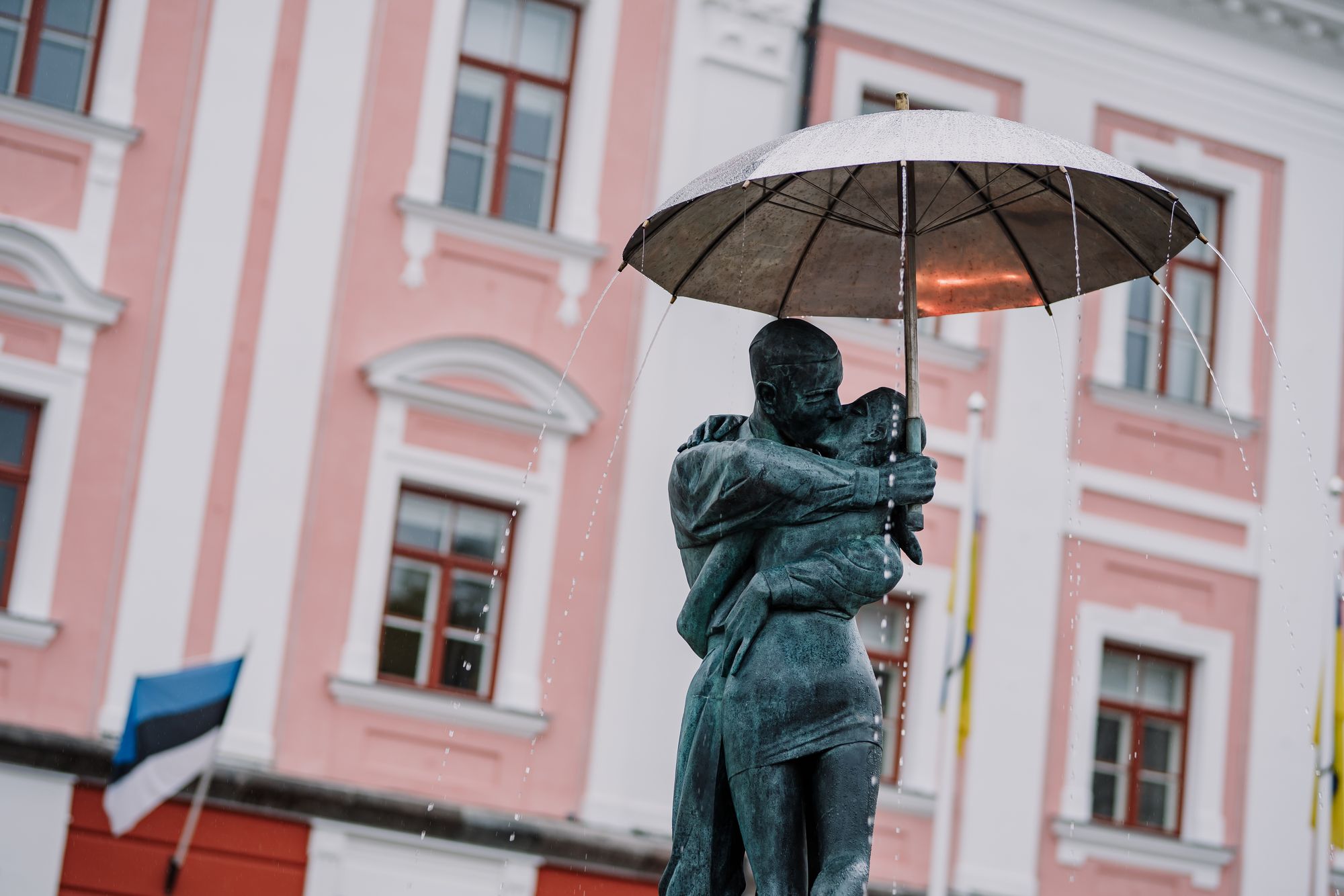
'The Kissing Students' sculpture and fountain is one of the most recognised symbols of Tartu. The fountain has stood in the same place since 1948, when newlyweds and their guests would visit it for luck, and people would also take a dip in it. The sculpture was created by Mati Karmin and completed in 1998. Since 2006 the fountain has been surrounded by tiles bearing the names of Tartu's sister cities – Bærum, Deventer, Ferrara, Fredriksberg, Hafnarfjörður, Hämeenlinna, Kaunas, Lüneburg, Pihkva, Riia, Salisbury, Tampere, Turu, Uppsala, Veszprem and Zutphen. Each of these is situated in the direction that the cities lie from Tartu, with the distances marked.

  • Sculptures

Monument to the Visit of Dalai Lama

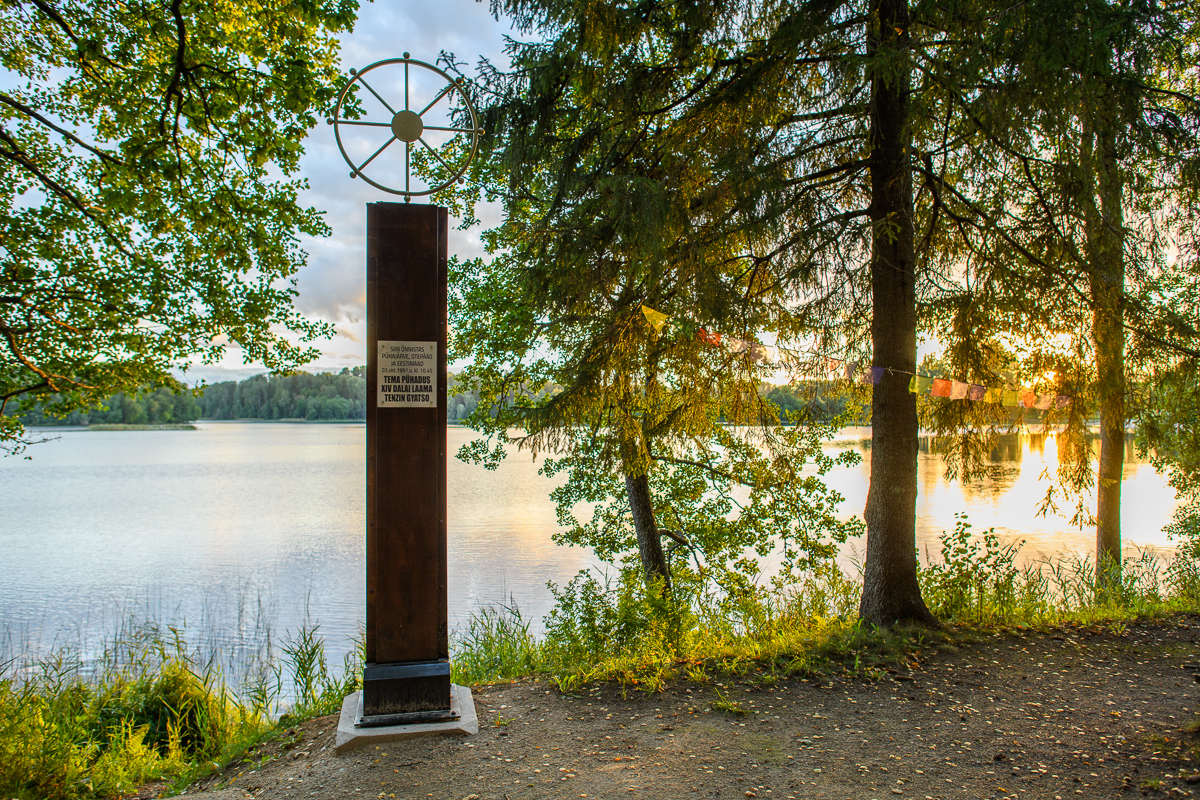
You can feel touched by the divine when walking on the beach or swimming in Lake Pühajärv.Namely, His Holiness the 14th Dalai Lama Tenzin Gyatso (born 1935), the leader of the Tibetan people, visited Estonia and Otepää on 3 October, 1991. He blessed Lake Pühajärv on the same day. The historical visit is commemorated with a wooden sculpture near the beach in Pühajärv Park.

  • Sculptures

Sculpture of Oscar Wilde and Eduard Vilde

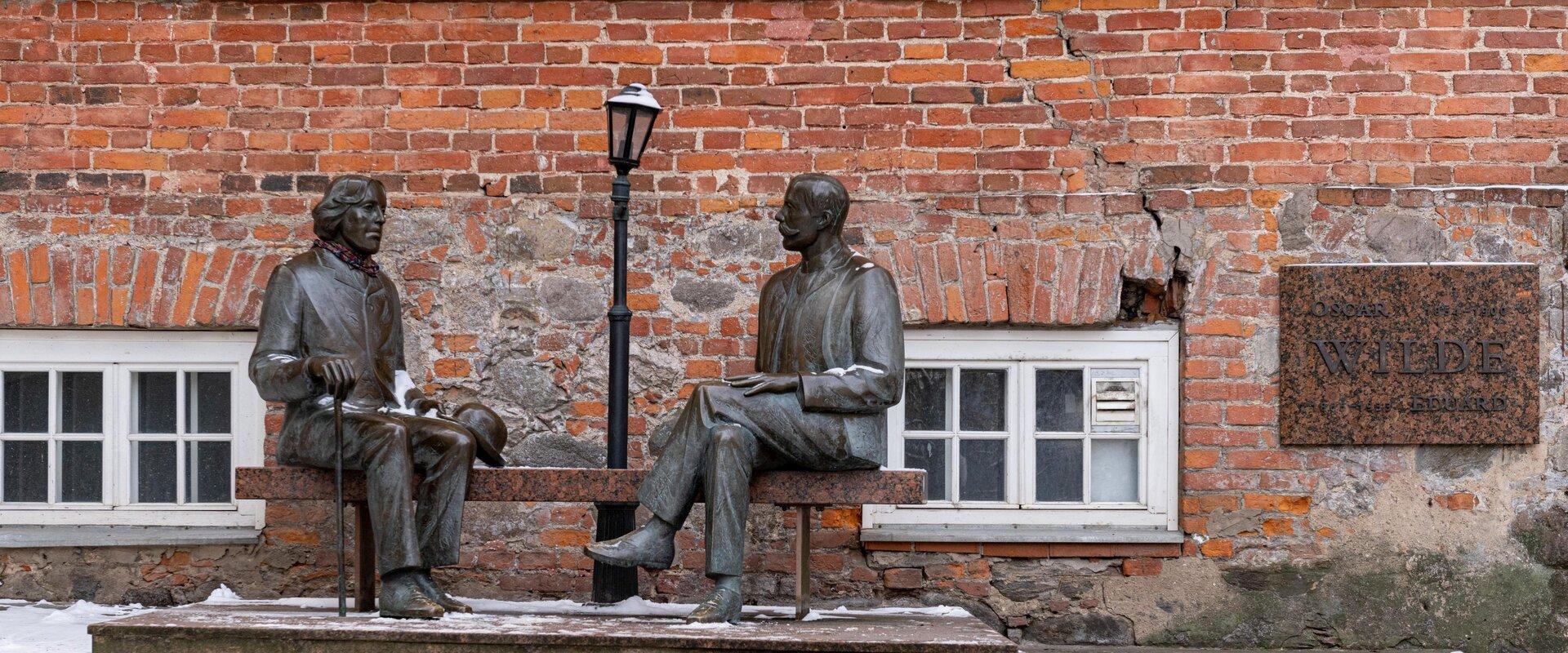
A sculpture created in Tartu's Old Town in 1999 depicts a fun speculation about the history of literature. Sitting on a bench are contemporaries and namesakes, or the two Wildes: Irish-born writer Oscar Wilde (1854-1900) and Estonian writer Eduard Vilde (1865-1933). Sculptor Tiiu Kirsipuu, who modeled the figures of the writers based on photographs, has noted that when creating the twin figures, she had in mind the year 1890, when the two Wildes could have really met each other and had a few witty words. The sculpture symbolizes friendship and intercultural dialogue. The sculpture of the two writers is located in front of the former Mattiesen printing house, one of Tartu's architectural monuments, which now houses the wine and art restaurant Vilde ja Vine. The statue is a beloved landmark among both locals and visitors. Sitting on the bench next to the writers allows you to take nice pictures as a souvenir of your visit to Tartu. In 2004, a copy of the sculpture was also donated to the city of Galway in Ireland, where the paternal family of literary classic Oscar Wilde came from.

  • Sculptures

Singing Mother Monument

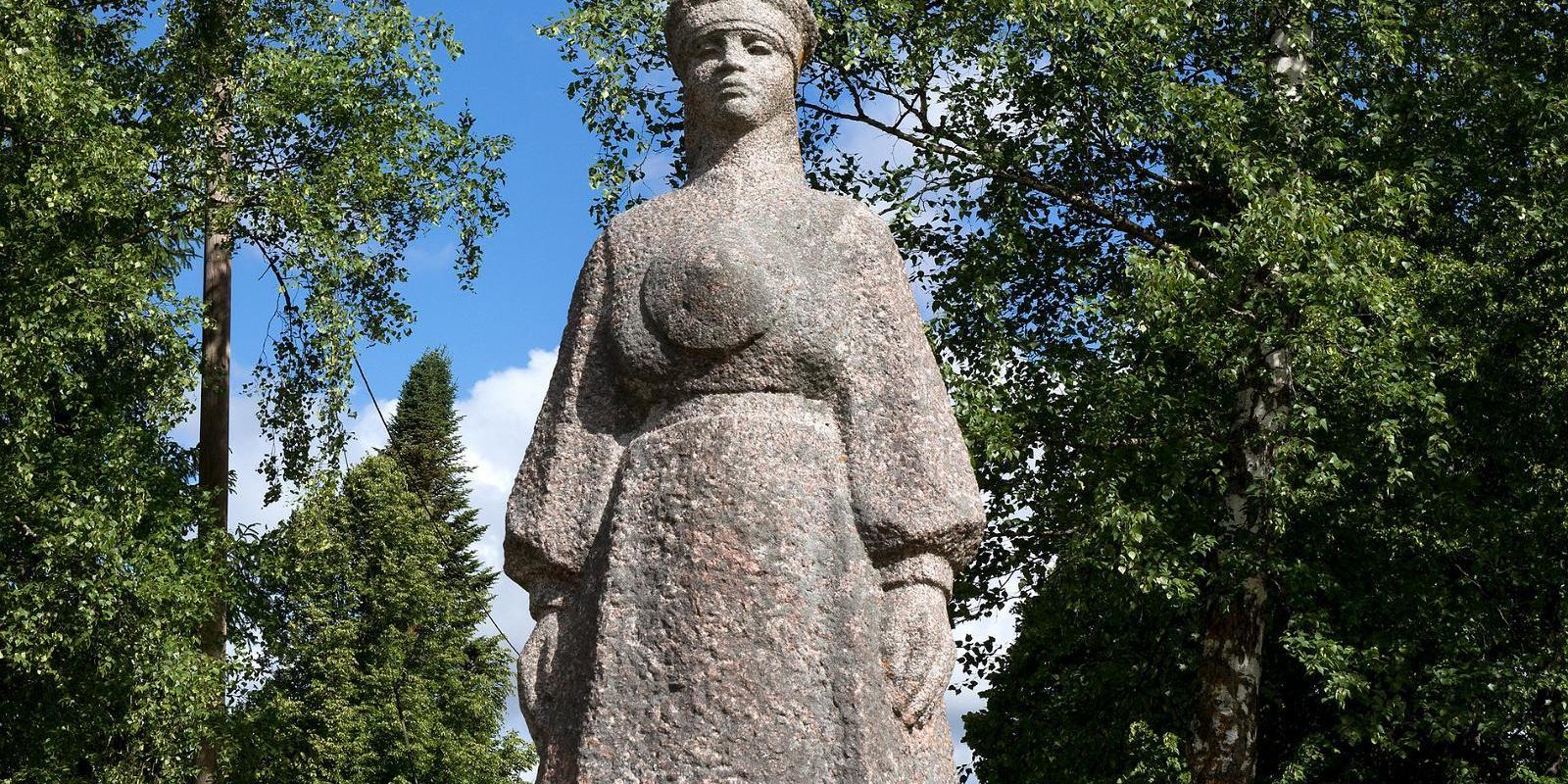
On the vista overlooking Obinitsa Lake stands the stone Singing Mother Monument. It's a memorial to all the "singing mothers" (Estonian: lauluemad) of Setomaa. The statue was erected in 1986. Around its base are many stones for local singers. The area around the monument offers a good view of Obinitsa Lake and the older part of the village. This is also a good place for a group picture. To the left of the Singing Mother Monument is Obinitsa's old school-church (1904).

  • Collaboration
  • News
  • Contacts
  • Privacy Policy
Join our mailing list!

"*" indicates required fields

This field is for validation purposes and should be left unchanged.
I authorise marketing

Southern Estonian Tourism Cluster

info@visitsouthestonia.com