• Avasta
    • Еда
    • Природа
    • Культура
    • Семья
    • Спорт
    • Сообщество
    • Блог
  • Planeeri
    • Размещение
    • Информация
    • Varamu
RUS
  • РусскийRUS
  • EestiEST
  • EnglishENG
  • LatviešuLAT
  • SuomiFIN
RUS
  • РусскийRUS
  • EestiEST
  • EnglishENG
  • LatviešuLAT
  • SuomiFIN
Populaarsed otsingud:
Näita kõiki tulemusi
  • History & Culture
  • Art & design
  • Monuments

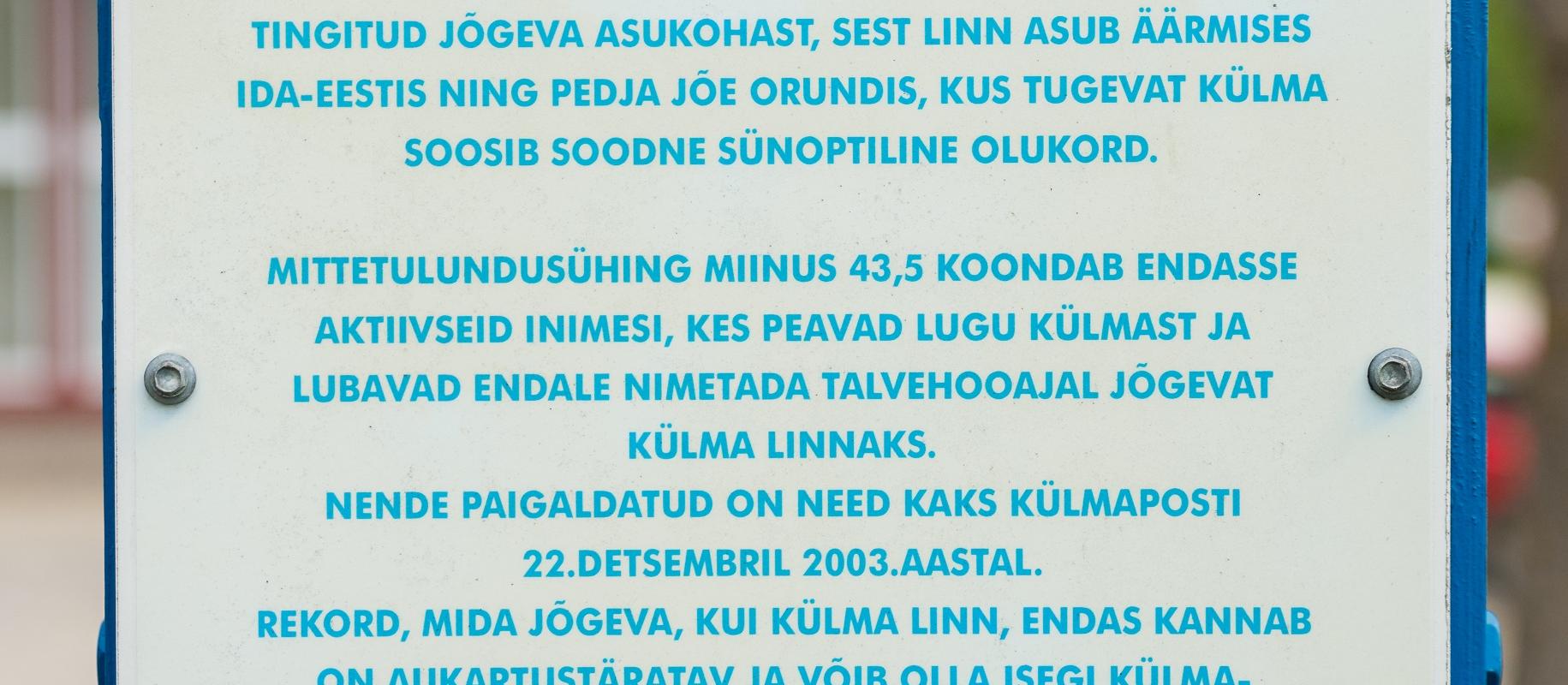
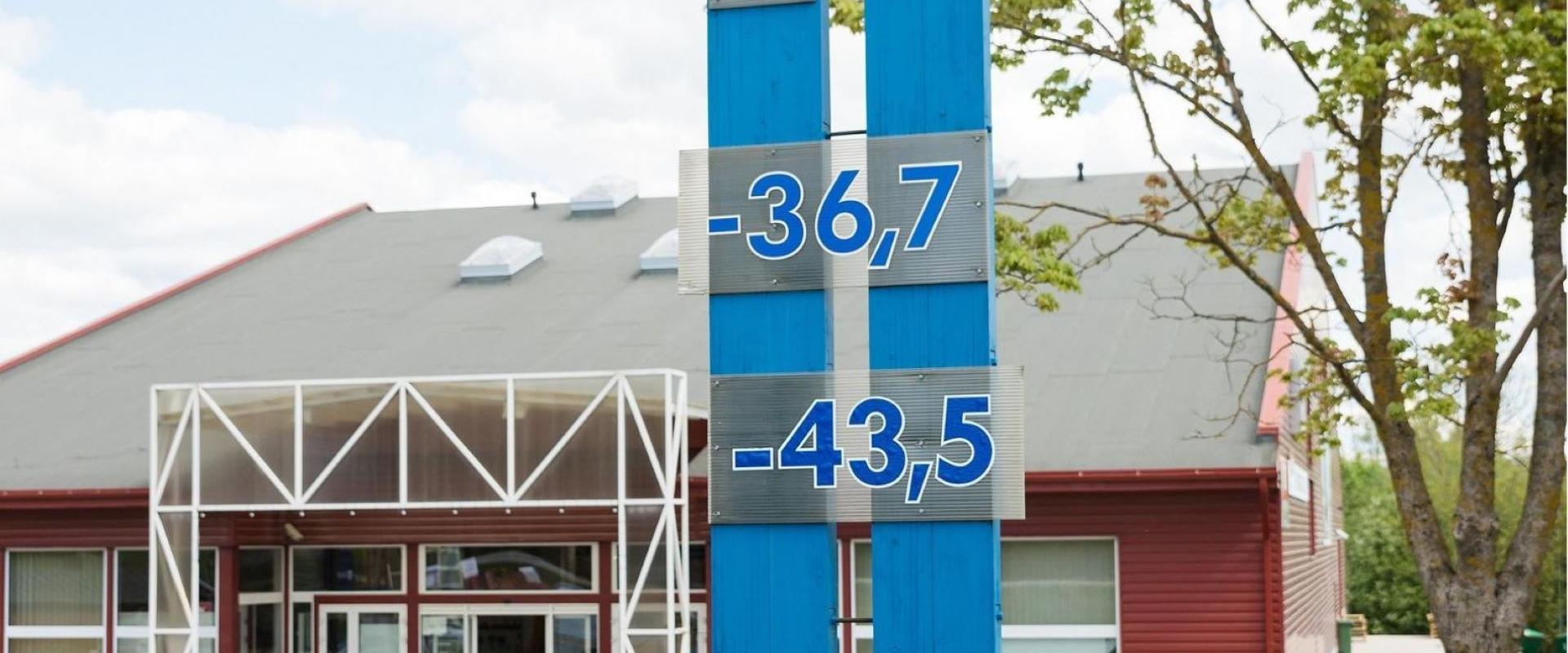
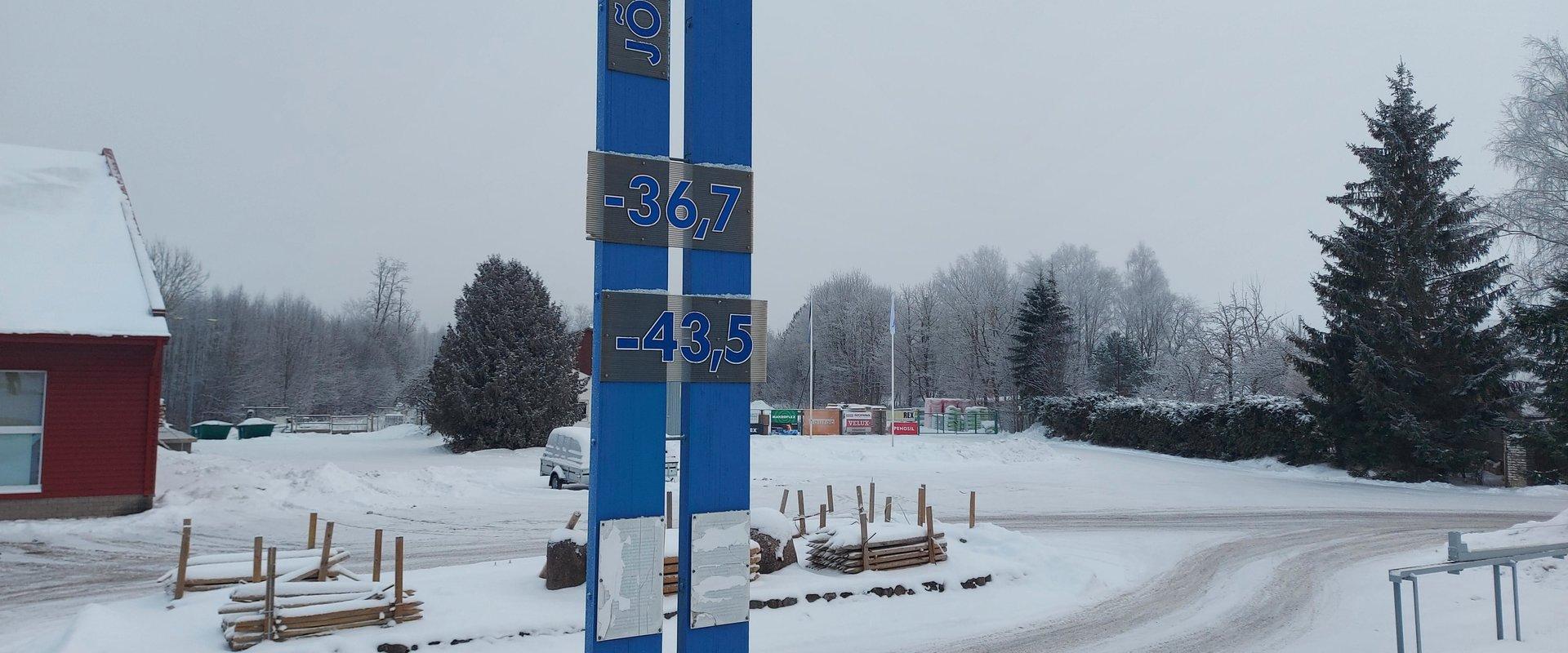
Monument to cold weather in Jõgeva

Tallinna mnt 2c, Jõgeva vald, Jõgeva maakond, 48305

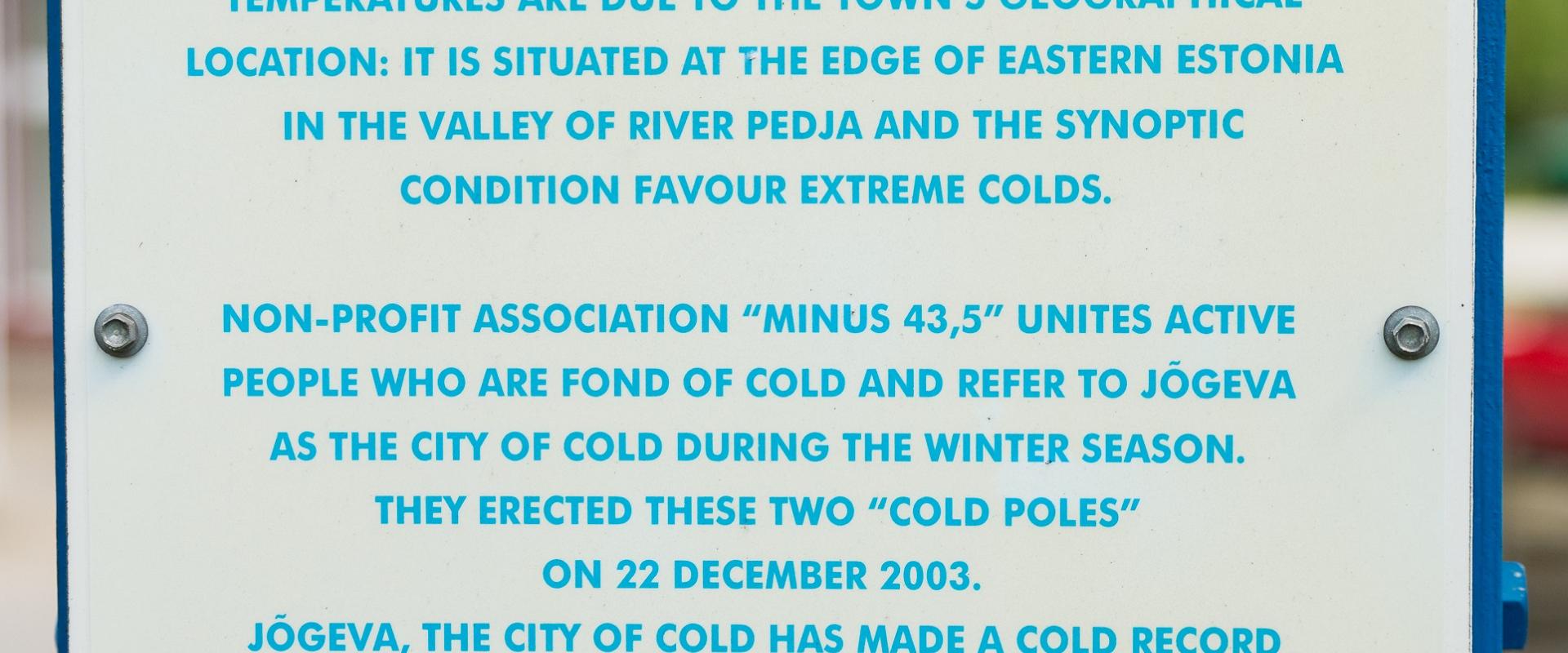
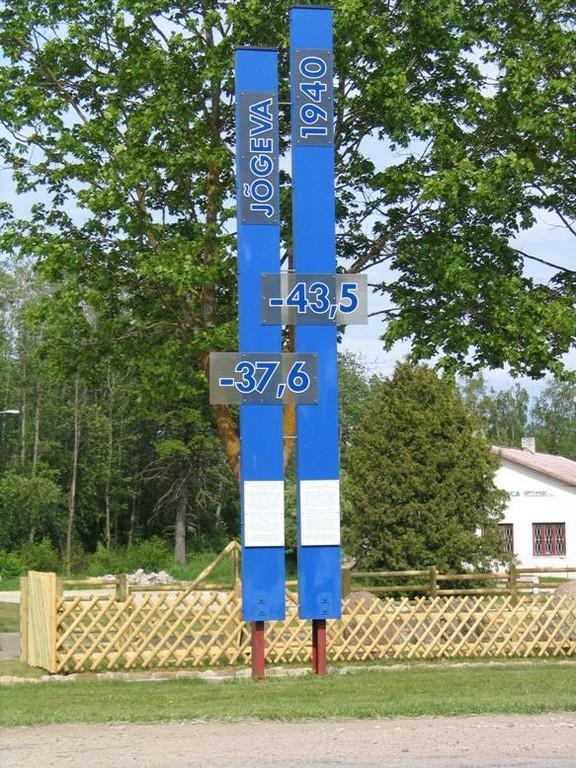
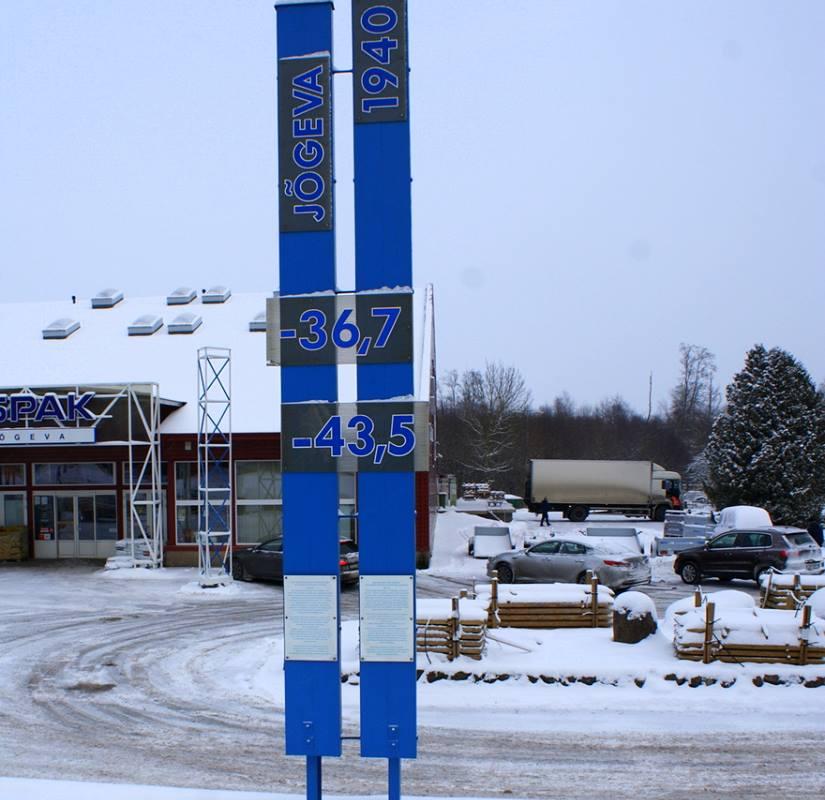
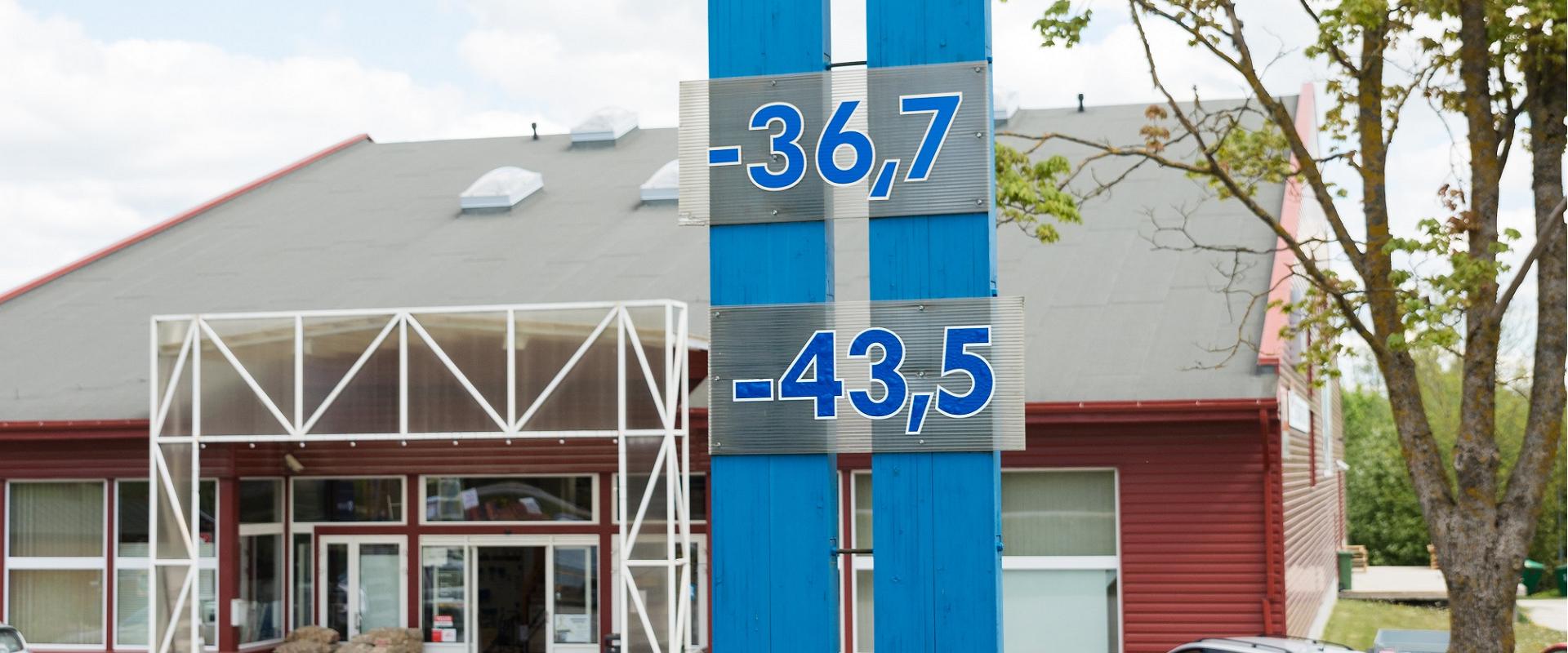
A monument to cold weather has been erected on the Piibe road on the outskirts of Jõgeva, where the lowest ever temperature in Estonia (-43.5*C) was recorded in 1940. The monument also highlights the most recent record of -37.6*C from 2003, also recorded in Jõgeva.

Mugavused

  • Free parking

Lahtiolekuajad

Aastaringselt

Ööpäevaringselt

Lingid

Vaata lisaks

  • Monuments

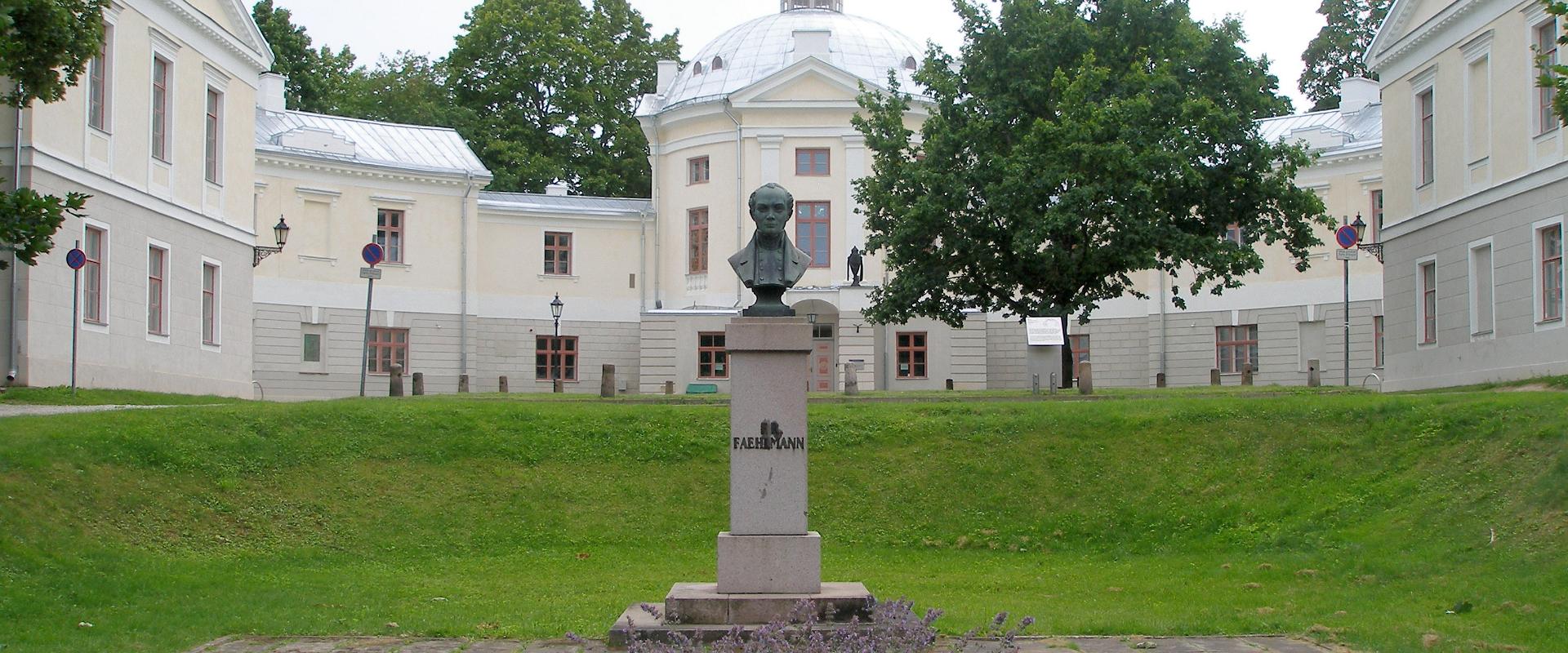
Monument to Friedrich Robert Faehlmann

The monument to Friedrich Robert Faehlmann – a bronze bust on a pillar of local grey granite – was opened in front of the Old Anatomical Theatre at Toomemägi, Tartu, on 18 May 1930. Friedrich Robert Faehlmann (1798 - 1850) was one of the founders of Estonian national literature, a physician and a democrat. He studied in Rakvere District School, Tartu Upper Secondary School and the Faculty of Medicine in the University of Tartu. Faehlmann worked as a physician in Tartu from 1824. He worked in the Old Anatomical Theatre. He was a lector of the Estonian language in the university and sometimes also gave lectures in pharmacology and prescriptions.

  • Monuments

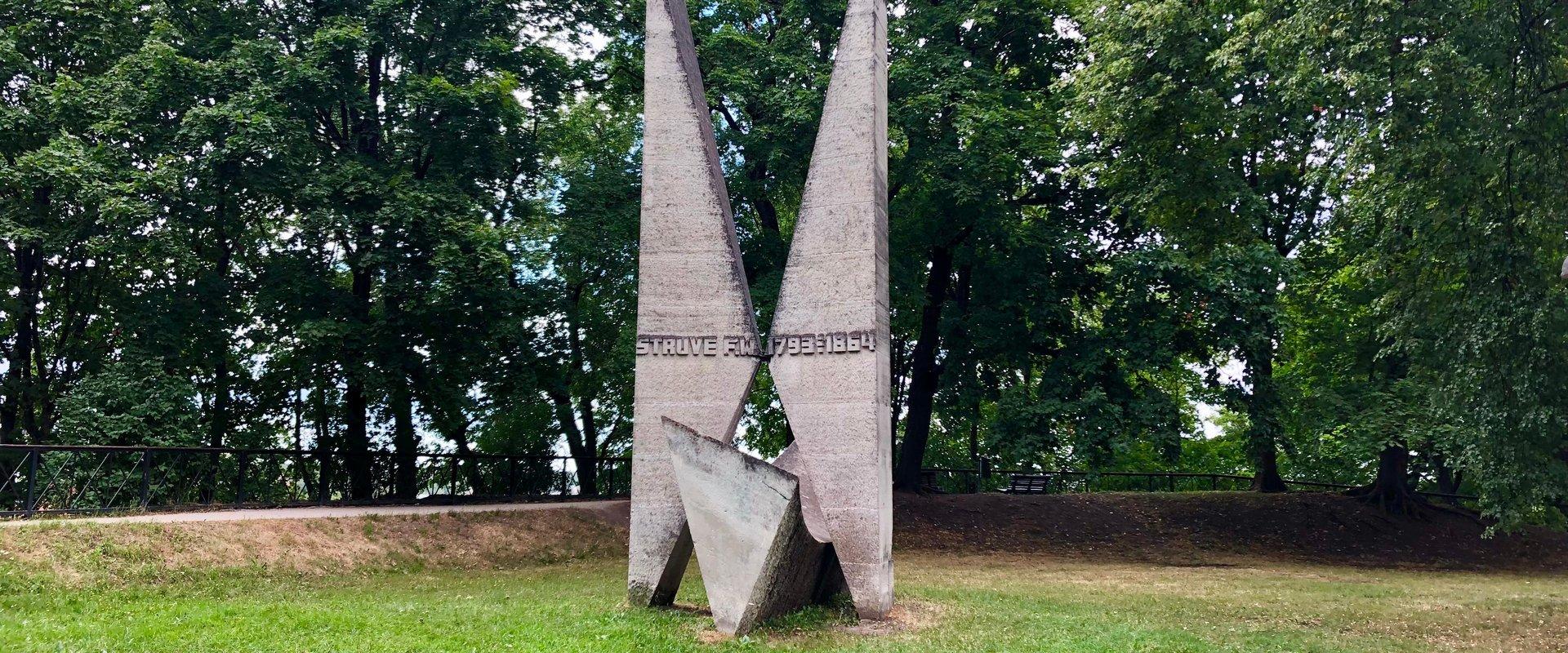
Friedrich Georg Wilhelm Struve Monument

Opened in 1969, the Struve Monument is dedicated to the former director of the Tartu Observatory, Fr. G. W. Struve (15 April 1793 – 23 November 1864), a Russian astronomer and geodesist of German origin. Under his leadership, the meridian arc was measured between 1816 and 1855 to determine the shape and size of the globe.The monument is an abstract work, inspired by the spirit of its era, reflecting the pursuit of the human race into space. The lower part of the sculpture is a sundial and the upper part is an hourglass. The authors of the monument are Olav Männi and Udo Ivask.The Struve street and the geodetic arc are also dedicated to him in Tartu.

  • Monuments

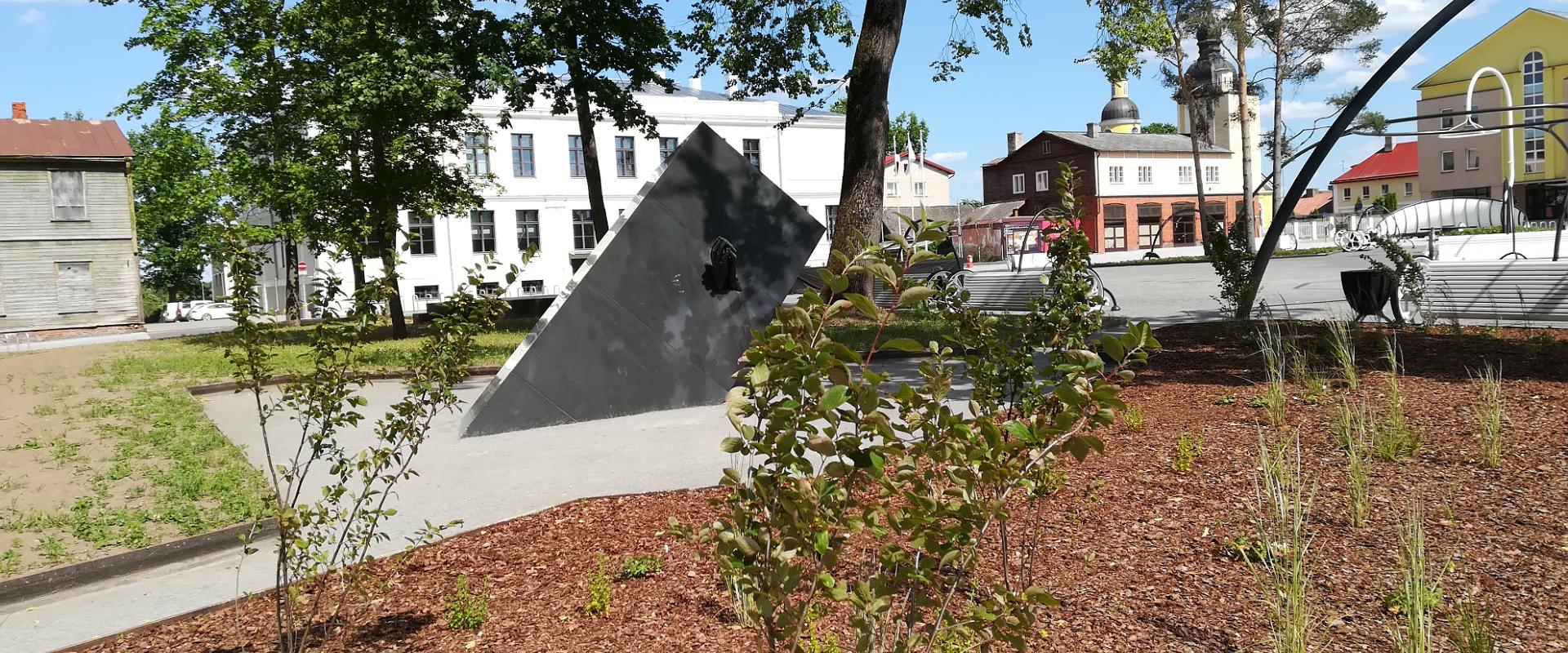
Memorial to the Victims of the Estonia Ferry Disaster

The memorial is located in Võru central square and is dedicated to the residents of Võru who died in the Estonia ferry disaster during the stormy night of September 28, 1994. The memorial was built in 1996 (sculptor M. Karmin).

  • Monuments

Monument to Soldiers Killed in the War of Independence

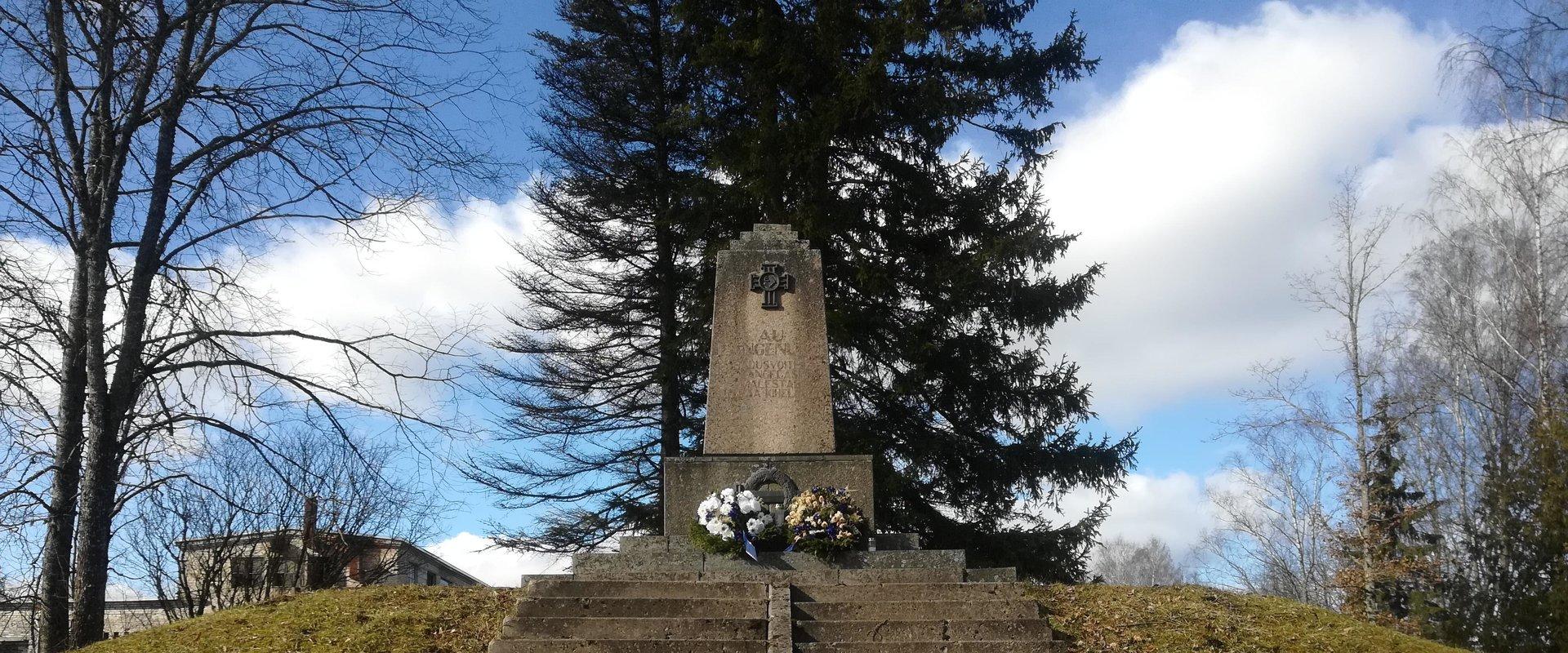
The monument to soldiers who fell in the War of Independence stands on a hill in front of Otepää Maarja Church and it is remarkable because it was hidden underground for 30 years. The monument was reopened in 1989 after renovation. The top part of the monument bears the words HONOUR THE FALLEN and a list of 22 names. The granite piece with the full list has been lost. The metal decorations were created at the initiative of sculptor Jüri Ojaver.Interesting facts: The initial monument was designed by Voldemar Melnik and made by stonemason Peeter Veeber. The monument was opened for the first time on 10 June 1928.

  • Monuments

The steam engine monument

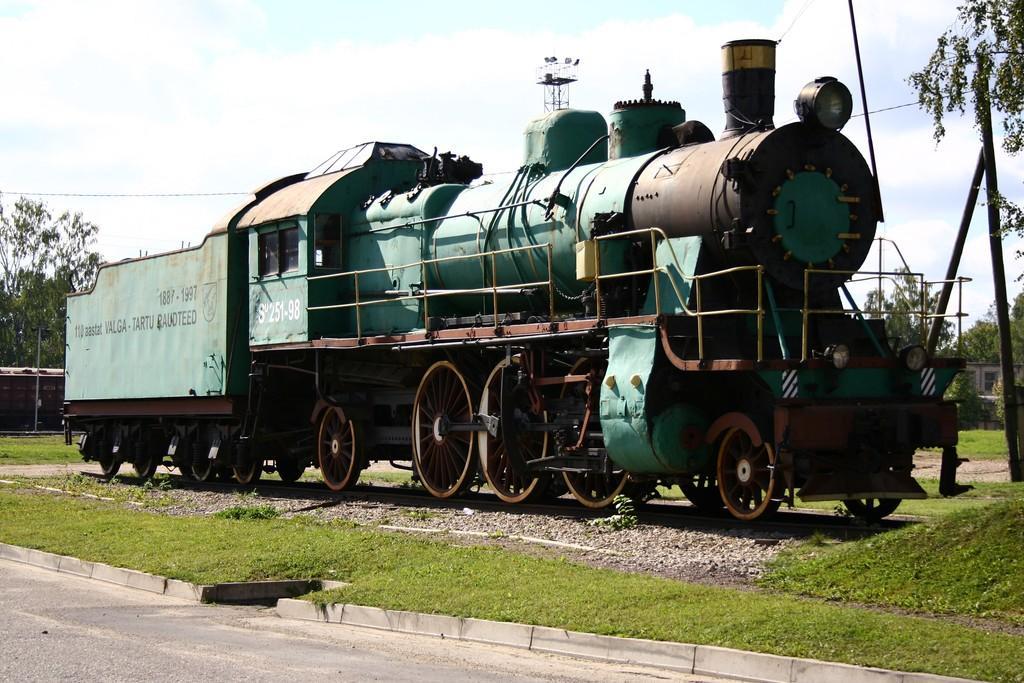
The year 1886 when the plan to build the Pihkva-Riga railway with a branch from Valga to Tartu became a crucial year in the development of the little town.The steam engine monument erected near the Valga railway station in 1998 celebrates the 110th anniversary of the Pihkva-Valga-Riga rail connection. Engine SU 251-98 was built in the Sormovo Shipyard in 1949. Interesting facts: * the engine weighs 87 tons and its output is 12 tons of steam per hour; * Riga-Pihkva railway was officially opened on 22 July 1889 in Pihkva.

  • Monuments

Monument to Friedrich Reinhold Kreutzwald

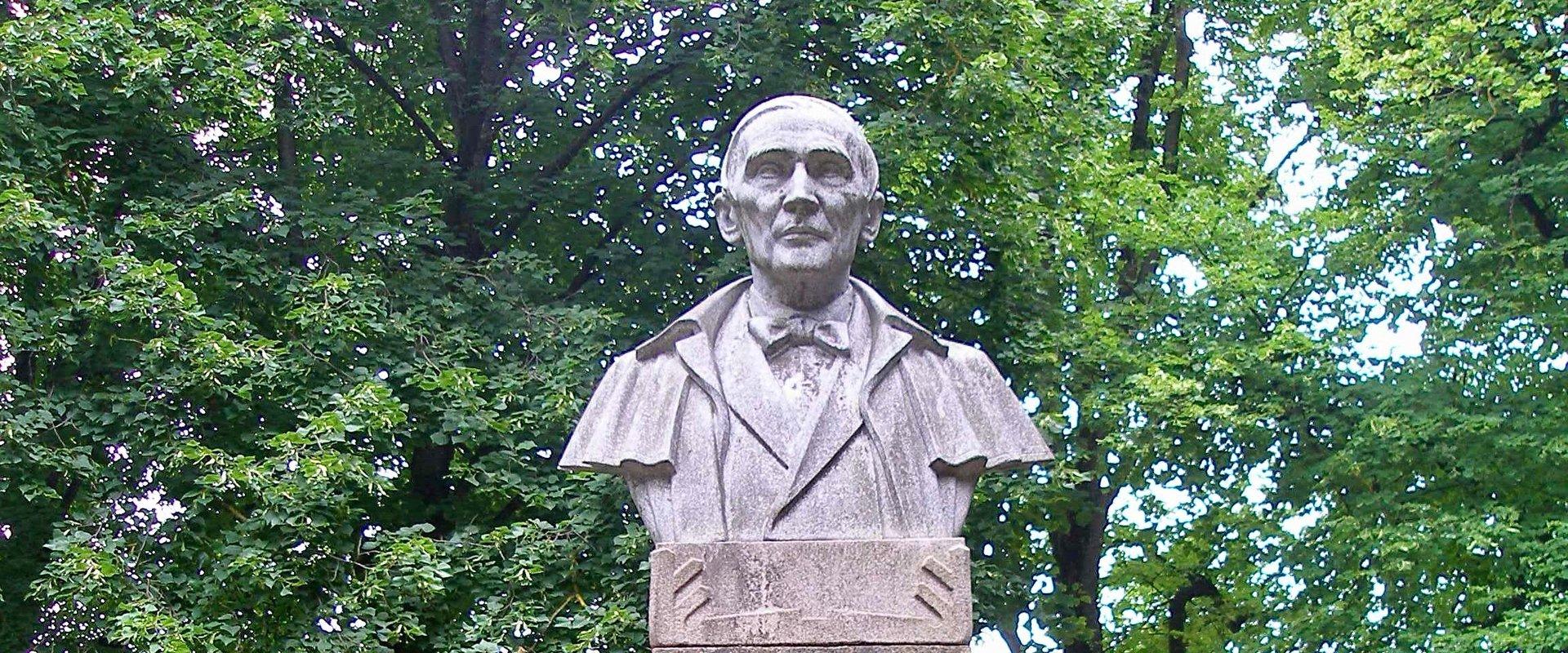
The monument to Friedrich Reinhold Kreutzwald (1803-1882), founder of the Estonian national literature, was built in 1952. The authors of the monument were sculptors Johannes Hirv and Martin Saks, and architects Heiki Karro, Ants Mellik, and Mart Port.

  • Monuments

Monument to Stefan Batory

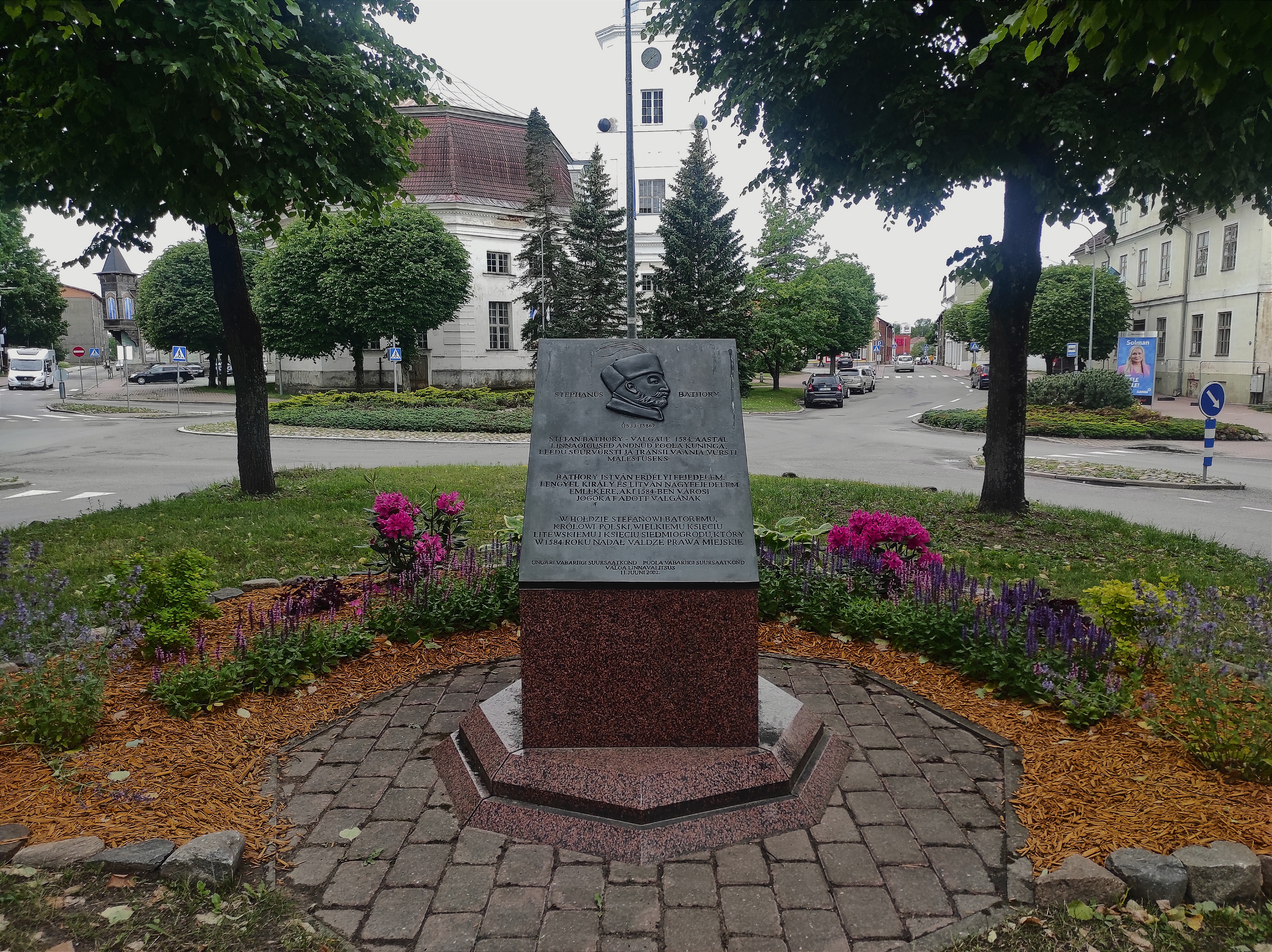
In 1562, Walk (the old name of present-day Valga) along with the rest of Livonia was handed over to Poland as part of the ceasefire agreement of the Livonian War. The city rights of Valga were signed by Polish King Stefan Batory on June 11, 1584, based on his colonization policy. The king believed that land should be granted as hereditary property to new Catholic settlers (peasants, craftsmen, merchants) in Livonia and thereby strengthen Catholicism in Livonia.Therefore, there is a monument dedicated to Stefan Batory on Kesk Avenue in Valga, which was completed in 2002 as a joint effort of the city of Valga, and the Hungarian and Polish embassies.
  • Monuments

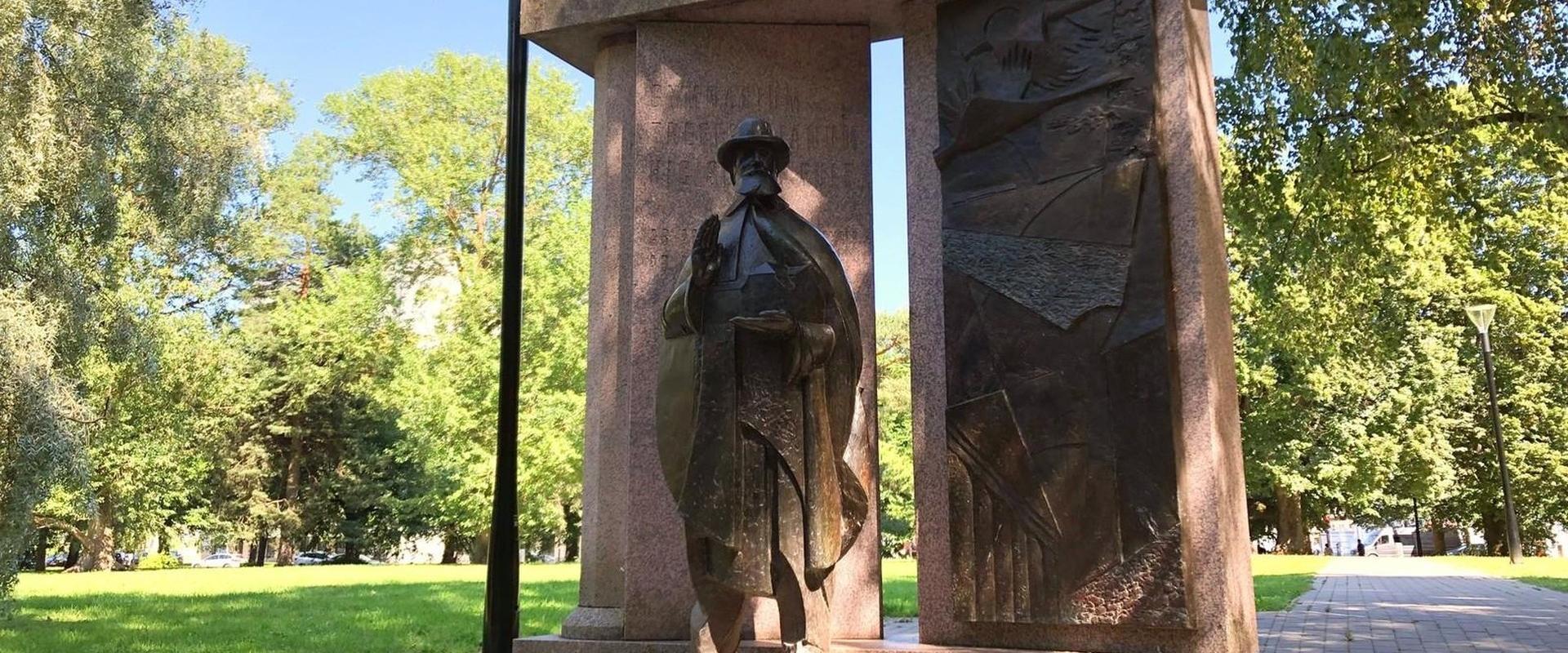
Monument to Hugo Treffner

Hugo Treffner (1845–1912) was an Estonian cultural figure and the founder of Hugo Treffner Gymnasium. The school still operates in Tartu (it was called the Tartu 1st Upper Secondary School during the Soviet era), on the wall of which is also the bas-relief of the first school principal Treffner on Rüütli tänav. It is considered one of the elite schools in Estonia.The monument erected in honour of Hugo Treffner is located on the bank of the Emajõgi River in the western part of Ülejõgi Park, on the site of the former Hugo Treffner private school. The authors of the monument are sculptor Mati Karmin and architect Tiit Trummal. The monument was opened on 25 May 1997.Hugo Treffner's grave is in Tartu, in the Uus-Jaani cemetery.

  • Privacy Policy

"*"обозначает обязательные поля

Это поле используется для проверочных целей, его следует оставить без изменений.
Я разрешаю маркетинг